
Climate change is the greatest threat to the world’s coral reefs. Reducing emissions will limit its impacts, but this action alone is no longer enough to guarantee the future of reefs.
Suites of interventions are being developed and trialled to increase coral reef resilience by helping reefs resist, adapt to or recover from the impacts of climate change
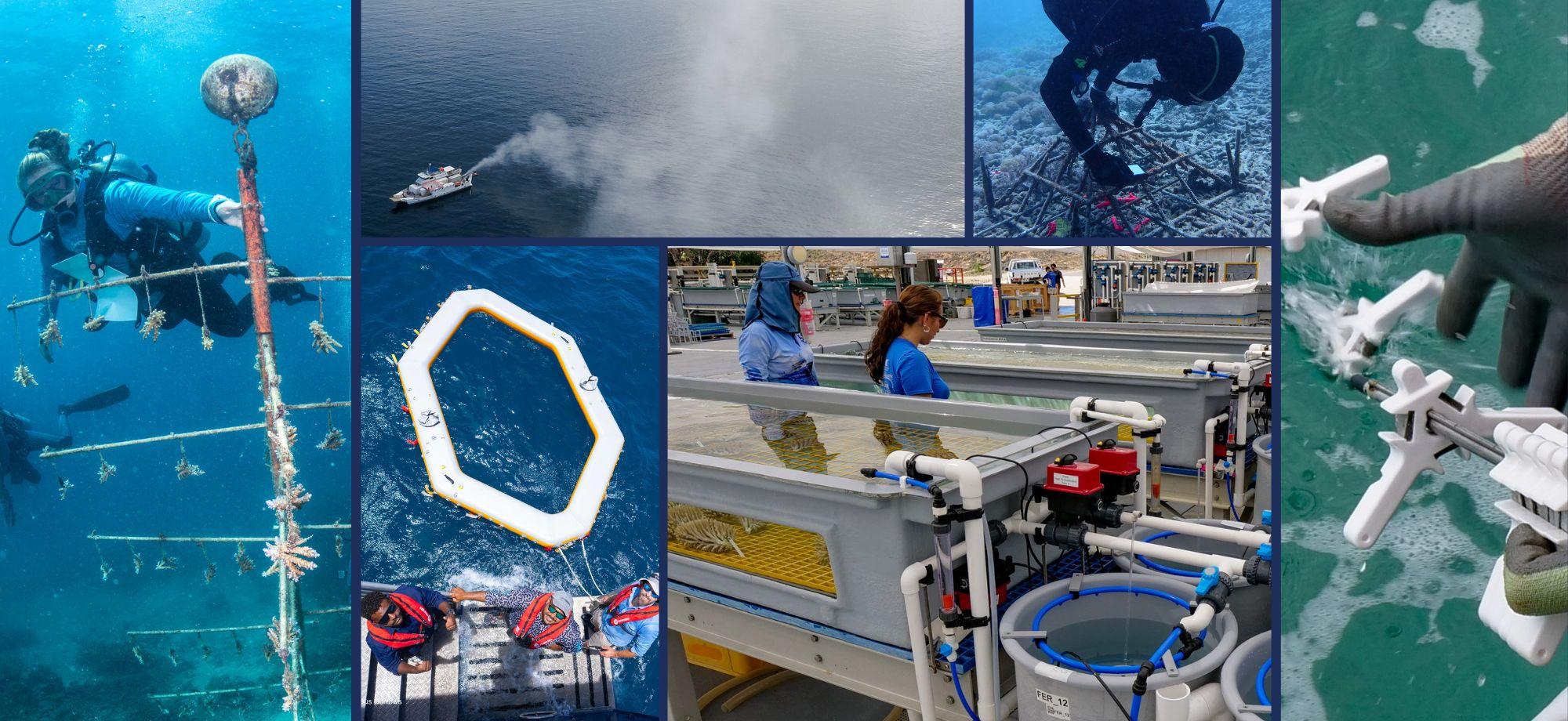
Proposed interventions vary in scale and approach – from small-scale actions like coral gardening to regional-scale approaches such as marine cloud brightening. These interventions may use new technologies or adopt new methods.
However, each intervention presents their own set of risks.
Understanding and evaluating these risks (including the risk of not intervening) is essential before progressing with interventions. Risks span ecological and natural system impacts, as well as social, economic, cultural, heritage, ethical and regulatory considerations. Careful assessment and management of these potential risks is important to ensure that chosen interventions are both effective, responsible and enable ambitious conservation goals.
Weighing up the pros and cons for global reef interventions
Through significant Australian investment – particularly via the Reef Restoration and Adaptation Program – AIMS has established a leading capability in intervention risk science and assessment, enabling responsible innovation in intervention programs.
We collaborate with national and international teams of researchers, managers and restoration practitioners to better understand the risks associated with marine ecosystem interventions, including for coral reefs.
Our dedicated team uses structured, proven approaches to:
- identify potential intervention risks and people’s concerns, values and interests
- review emerging research and knowledge to address real and perceived risks
- undertake risk assessments and embed these within intervention programs
- identify knowledge gaps and strategies to address such gaps (including targeted research and staged testing).
- analyse risks and provide advice on risk management options in a comprehensive, fit-for-purpose way.
We are also developing global assessment frameworks to build a fuller understanding of intervention options to inform science and policy. These frameworks are applicable across marine environments and intervention types.
Our work directly supports statutory and regulatory processes for coral restoration and other interventions, as well as program design and decision making. We integrate ecological, social, cultural and governance considerations, and help operationalise environmental protection goals and ethical principles.
We are integral to the development of interventions for Australia’s Reef Restoration and Adaptation Program (RRAP), its associated Pilot Deployments Program and our work supports the international Coral Research & Development Accelerator Platform (CORDAP).
Feature images (clockwise from left): M. Curnock, SCU, UQ, M. Roman, M. Roman, G. Burrows


