
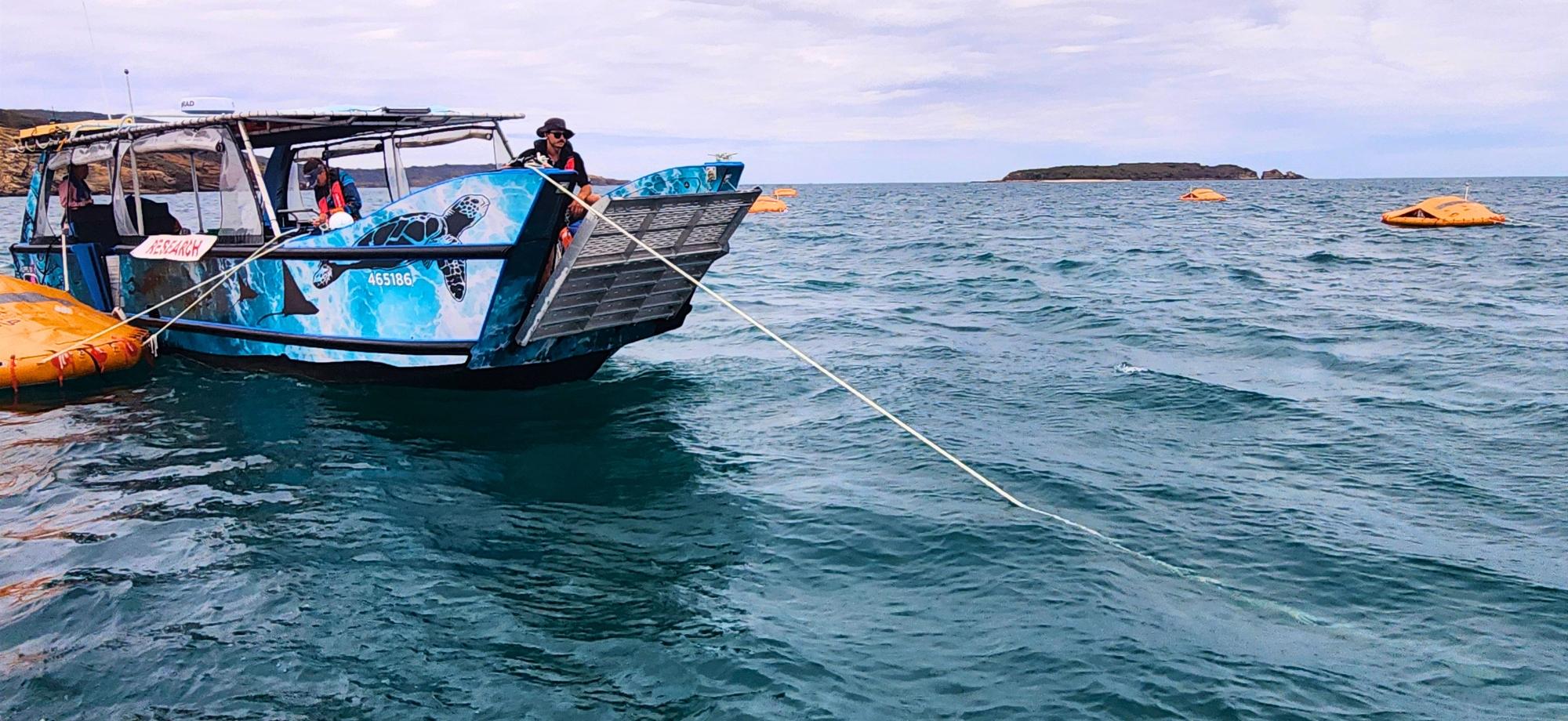
One of the biggest challenges to effective reef restoration is applying interventions at scale, particularly in areas as vast as the Great Barrier Reef. To meet this challenge, the Pilot Deployments Program (PDP) is translating reef interventions from research and development, and trialing how these can be scaled up to a large-scale reality.
The scientific and technological advances made by teams from the Reef Restoration and Adaptation Program (RRAP) have resulted in innovative approaches to large scale reef restoration. Since 2018, AIMS and our collaborators have been developing a toolbox of interventions to help coral reefs recover from the effects of climate change, and resist warming temperatures caused by climate change.
The PDP’s primary goal is to make these interventions fully operational, testing and developing them from a ‘proof of concept’ stage to a point where they are ready for large-scale application by developing third-party supply chains and building local capacity on the Great Barrier Reef.
A key step in moving the current science to this restoration reality involves using the power of local people. Building on the lessons from projects like Boats4Corals, the PDP is actively engaging the local community, their skills, vessels, and knowledge to create partnerships with a diverse range of organisations and the community.
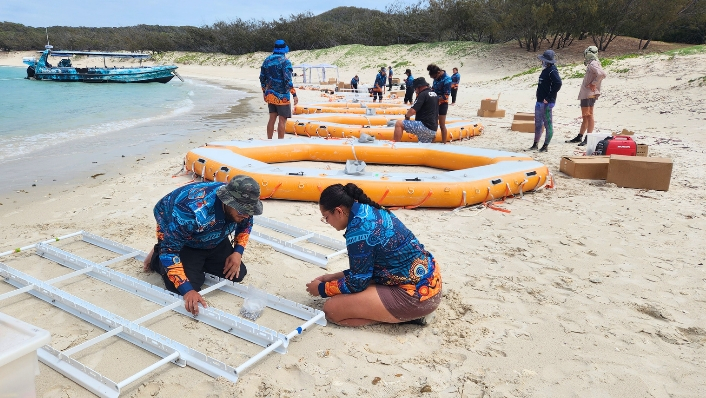
The program develops new technologies to make it easier and more efficient to restore reefs at larger scales. The team work iteratively through cycles of field deployment, learning, re-design then re-testing to continually enhance different stages.
Stepping up scale - Pilot Deployments Program on the Great Barrier Reef in 2026
This year, we’re continuing large-scale reef restoration trials on reefs off Cairns and Port Douglas in the northern Great Barrier Reef and Yeppoon in the south.
As in previous years, two innovative intervention methods will be the focus of the PDP 2026 operations:
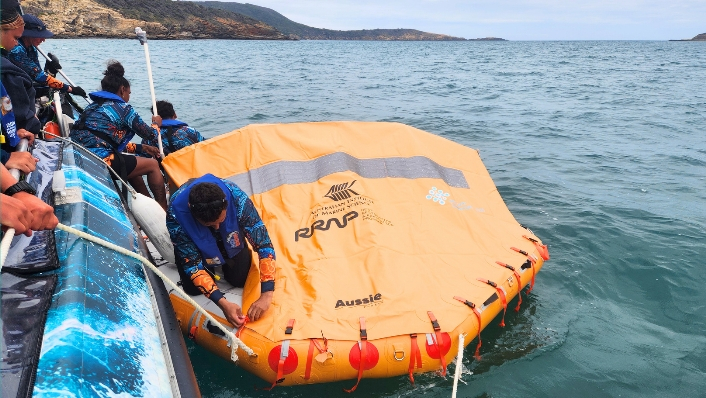
- Slick Collection and Release: This method uses the natural sexual reproduction of wild corals on the Reef. Genetically diverse coral spawn slicks are collected on the ocean surface, allowed to fertilise and develop into coral larvae, and then delivered to target reefs to accelerate reef recovery. This is done by crews on the water using tools such as larval pools and seedboxes.
- Conservation Aquaculture: This involves collecting wild adult coral colonies to spawn in land-based aquaculture facilities, producing settled juvenile corals. These are then delivered to target reefs on coral seeding devices.
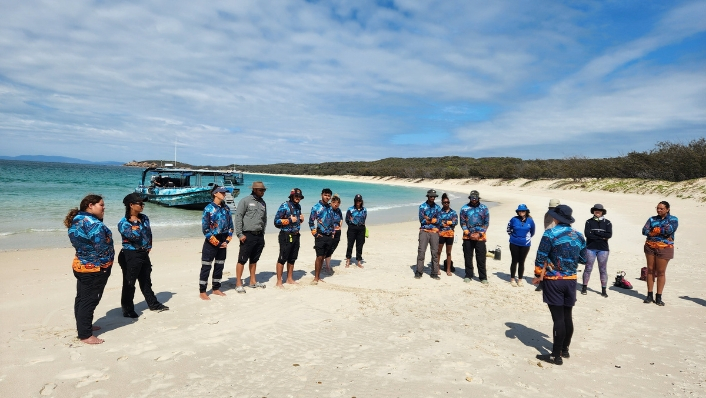
Many reef operators are joining the PDP again this year, having built valuable skills and experience over the last couple of years with the program. Some tourism operators and Traditional Owner groups are joining for a second or third year for larval release activities and will take on greater responsibilities, with AIMS providing support and oversight.
Industry partners in coral aquaculture and Traditional Owners will also take on greater responsibilities using two ReefSeed units for land-based aquaculture activities in Innisfail and Cairns.
We’re aiming to deploy around 150, 000 seeding devices onto the Reef this year, up from around 44, 000 last year. As we scale up these restoration trials, we’re improving the processes and technologies involved to meet these goals.
PDP trials will be carried out on multiple reefs between October and December around the Keppel Islands in the southern Great Barrier Reef. Trials in the northern Great Barrier Reef will take place on reefs off Port Douglas and Cairns and will take place between November and February 2027.
Why is this needed?
Climate change is the greatest threat to reefs worldwide. Reducing emissions is critical to ensuring the future of coral reefs around the world. The reef's natural recovery processes are now severely challenged. Following major disturbances, reef-building coral populations can be decimated, leaving the reef "larval limited". Therefore, in tandem with global action on emissions, good local management and scalable interventions to restore reefs are required.
Collaboration team
Dr Mark Gibbs – Program Director, Pilot Deployments Program (AIMS)
Pilot Deployments Program team
RRAP research providers including SCU, QUT and CSIRO
Community and industry participants
The use of the coral larval rearing pools is through AIMS’ collaborations with:
- Professor Peter Harrison from Southern Cross University
- SECORE International {whose pools are referred to as CRIBs (Coral Rearing In-situ Basins)
This project is supported by:
Australian Government’s Reef Trust
Australian Institute of Marine Science
This page was updated in October 2026.


