One of the greatest challenges to reef restoration and resilience projects is scale. While many methods may work at a small scale, recovery efforts over much larger sections of reef are needed.
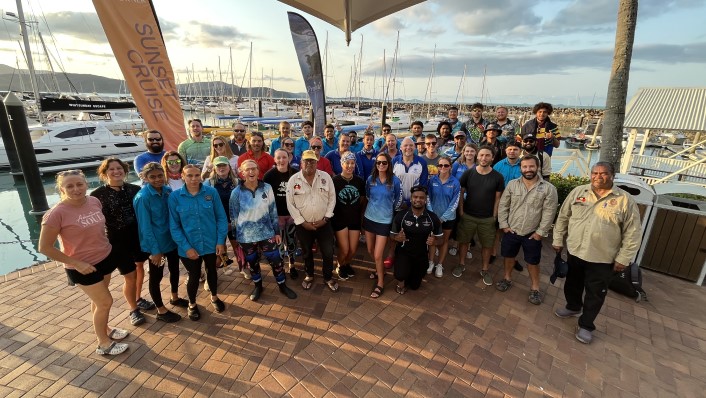
Boats4Corals is helping to scale up slick collection and larval release in the Whitsundays by harnessing the power of local skills, vessels and passion.
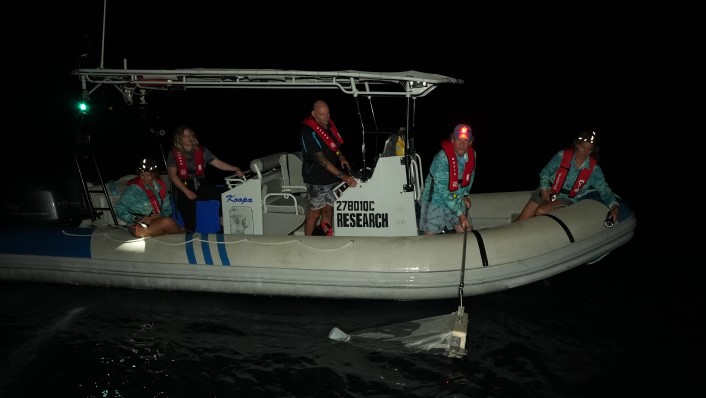
PDP project lead Dr Mark Gibbs (AIMS) and Boats4Corals project lead Dr Deborah Foote, with support from Prof. Peter Harrison (Southern Cross University) have developed an approach to safely and effectively bring many hands on deck to deliver more coral larvae to more reef areas. Local tourism operators and Traditional Owners are being trained in the method; from identification of spawning slicks, to releasing coral larvae from floating nursery pools onto the reef.
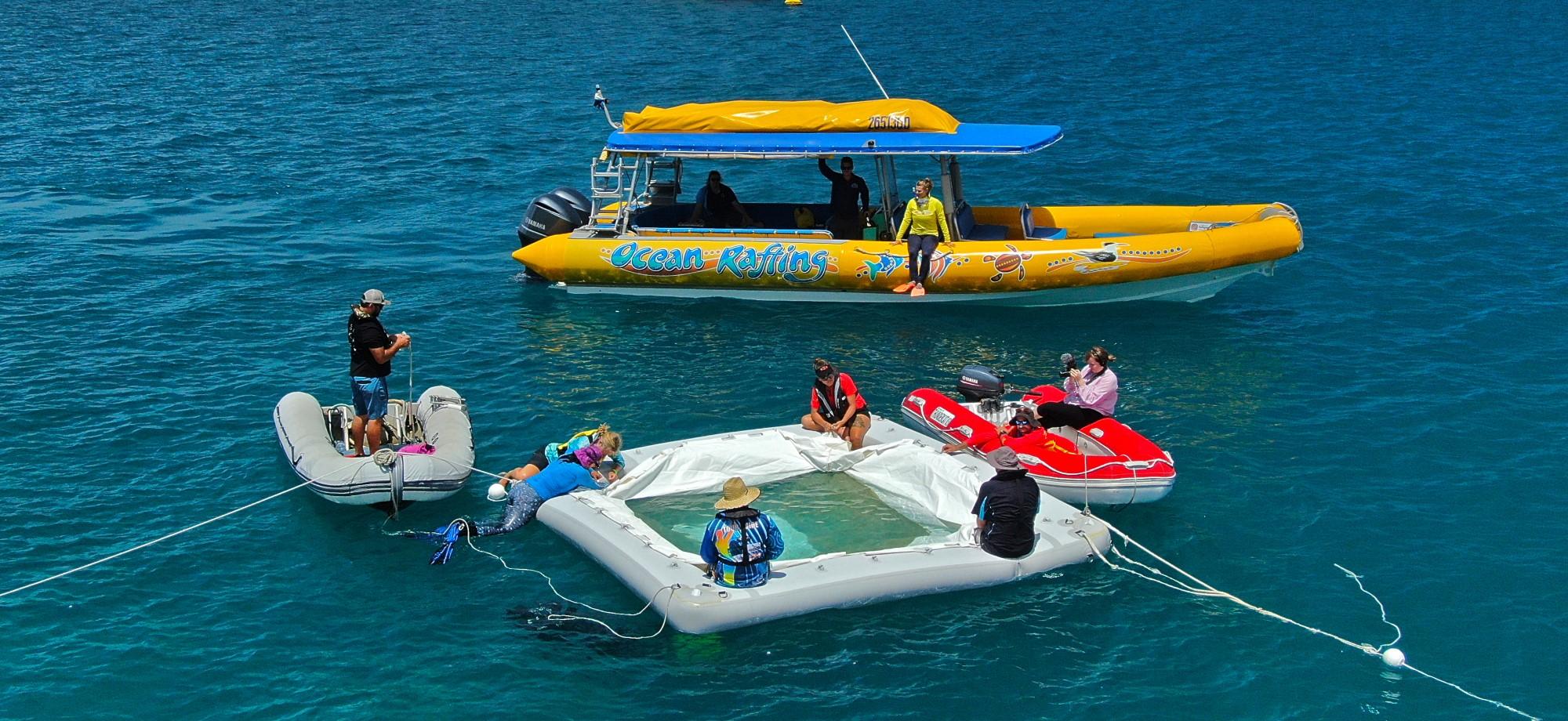
Slick collection and larval release involves collecting coral egg and sperm bundles from naturally occurring spawning slicks on the ocean surface during the spawning event. The fertilised eggs are placed into floating larval pools at sea, where the developing larvae are held for approximately one week, until they are ready to settle onto the reef. The larvae are deployed onto the reef via targeted cloud release (where the larvae are released to find their own place to settle on the reef) or on coral seeding devices (where larvae are settled onto the devices in the larval pools, then the devices placed onto the reef). When coral larvae settle, they form a permanent attachment to either the reef or seeding device, which is where they will live for the remainder of their lives.
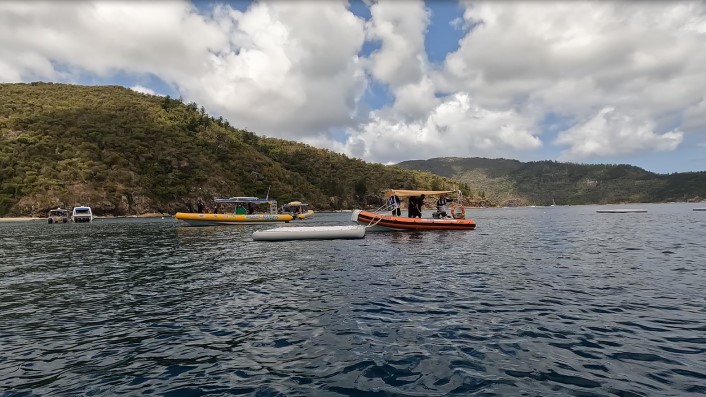
Ultimately, the project will provide a routine, safe, sustainable, and effective means of undertaking coral reef restoration by the reef community in the Whitsundays region. The end goal of the project is to have local operators willing and able to continue the restoration activities into the future without research organisation oversight.