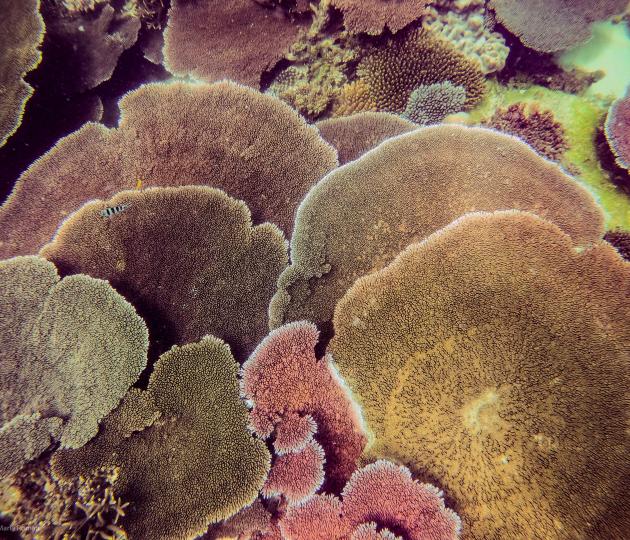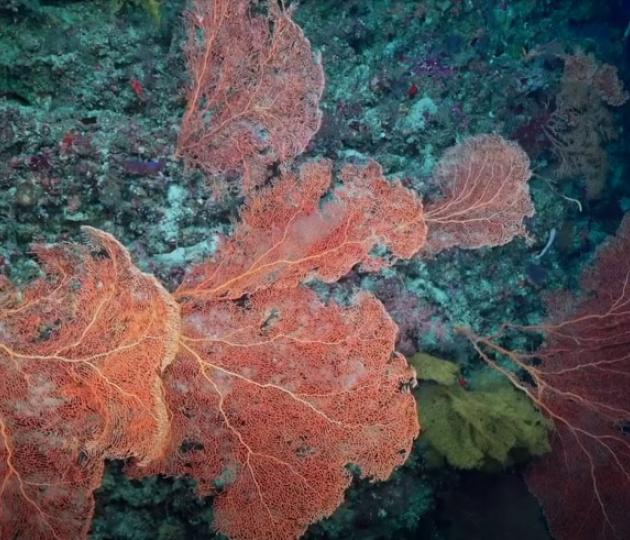
In a world-first, scientists have peeled back yet another layer of complexity to the inner workings of corals with the discovery of a new bacterial relationship.
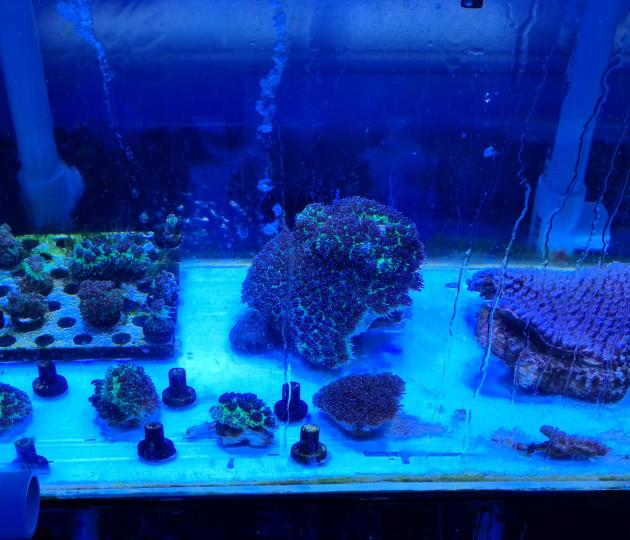
A new study has shown climate change will have serious consequences for the ability of baby corals to cope with elevated sediments occurring inshore in the Great Barrier Reef.
While 2021 is the International Year of Sound, a global community of scientists are asking us to tune into the drowning sounds of the ocean.
Surveys from the AIMS Long Term Monitoring Program have returned good news from the southern Great Barrier Reef, showing offshore reefs suffered little impact from moderate bleaching during the 2019-20 mass coral bleaching event.
Scientists are keeping a close eye on reefs along the west coast of Australia, with sea surface temperatures reaching levels where some coral bleaching is occurring.
The AIMS water quality team have recommenced field sampling in the coastal waters of the Fitzroy region in the southern Great Barrier Reef, in partnership with the Great Barrier Reef Foundation.
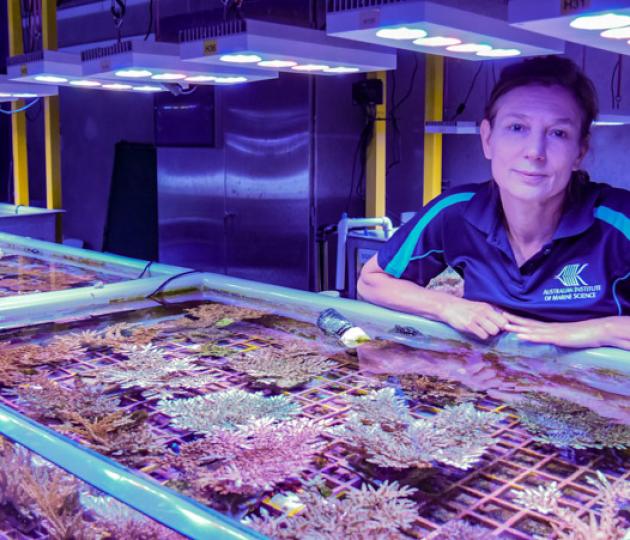
To celebrate International Day of Women and Girls in Science, we asked five of our scientists about their role at AIMS, and the rewards and challenges of being a woman in science.
Artificial intelligence may soon be counting and classifying Australia’s tropical fish populations if at least one of the four Australian technology businesses to receive Australian Government seed funding is successful.
AIMS is harnessing the world-leading expertise of Accenture in a partnership to create a cloud-based machine learning platform to help the world better manage coral reefs.
The Australian Institute of Marine Science recognise Aboriginal and Torres Strait Island peoples as the Traditional Owners of the land and sea country in which we work, and Australia’s first scientists and custodians of country.