Scientists at the Australian Institute of Marine Science (AIMS) have found some fast-growing coral species on the Great Barrier Reef slow down their growth rates when exposed to warm water.
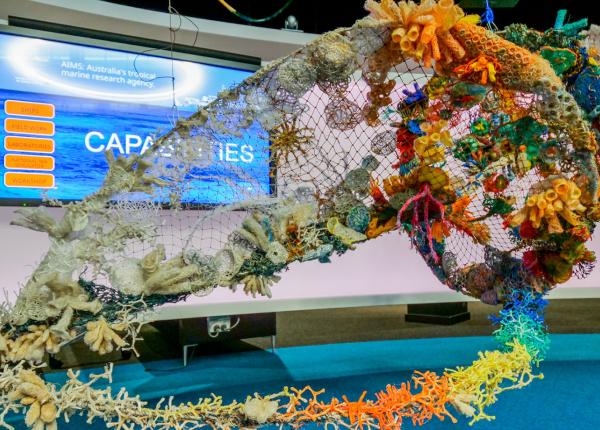
In a mix of sea, science, and artistic collaboration, AIMS staff celebrated the Institute’s 50 years by creating a large art installation using ghost nets.
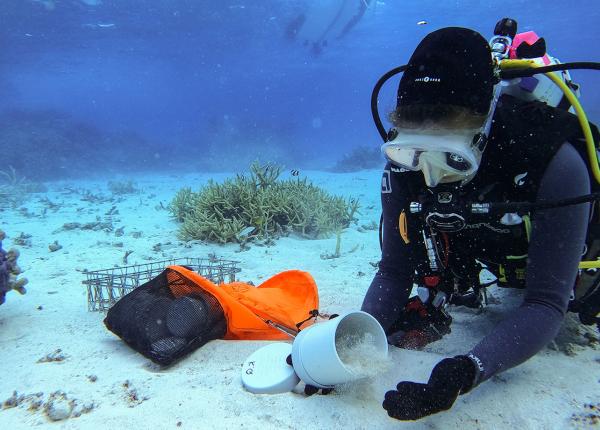
Marine scientists gathered with Traditional Custodians on Woppaburra sea Country this week for an ambitious field event during the annual mass coral spawning on the Great Barrier Reef.
AIMS scientists have been in Northern Territory waters looking for endangered sawfish species alongside the experienced professional fishing crew from Wild Barra Fisheries' FV North Islander.
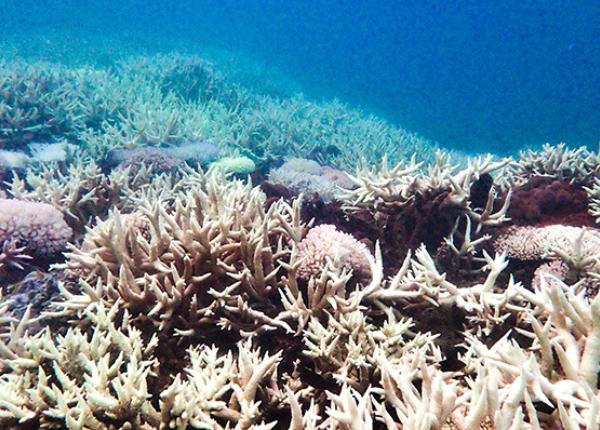
A team of scientists from James Cook University (JCU) and the Australian Institute of Marine Science (AIMS) have found that some coral species can adapt to increasing temperatures that cause bleaching, but only when marine heat wave events remain mild.&nb
Deeper waters at remote Ashmore Reef off the Western Australian coast could be acting as a refuge for sea snake species not seen in shallow waters for more than a d
A new volume now published in the Coral Reefs of the World series explains how omics approaches are helping with the development of innovative methods in coral reef restoration and conservation.
Like self-driving cars, self-driving or autonomous boats are rapidly developing to perform a wide range of tasks from marine monitoring and mapping to surf rescue, border patrol and ocean surveillance.
For the first time, researchers from the Australian Institute of Marine Science (AIMS) have successfully bred the next generation of captive-raised corals in an experimental aquarium outside of their natural reproductive window, months before the annual spawning season on
The northern and central Great Barrier Reef have recorded their highest amount of coral cover since the Australian Institute of Marine Science (AIMS) began monitoring 36 years ago.