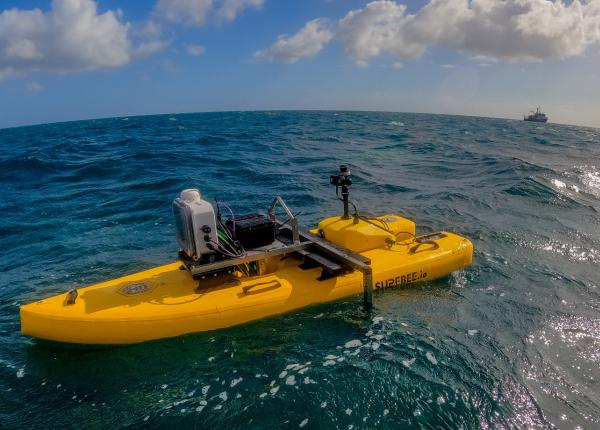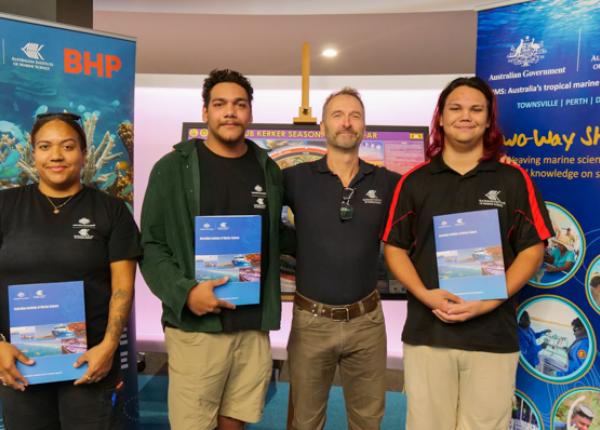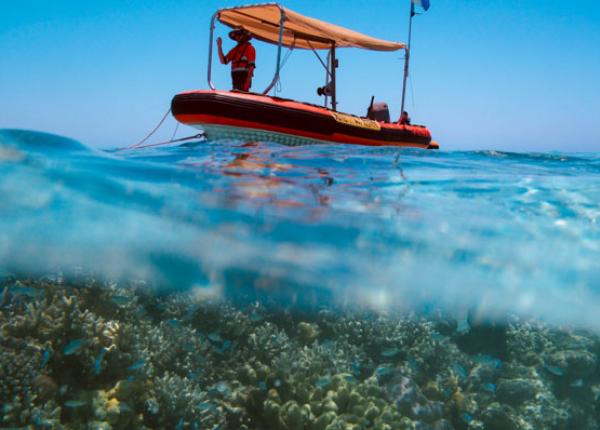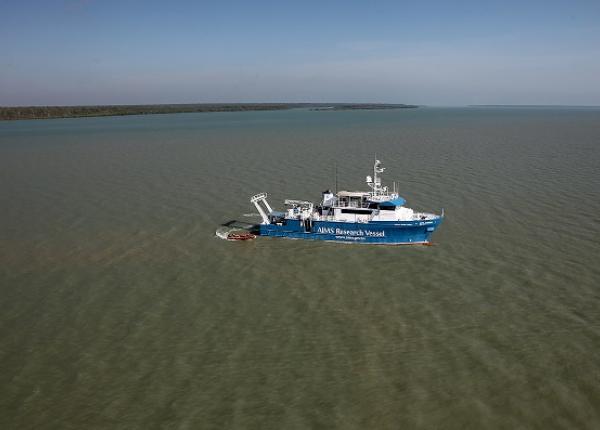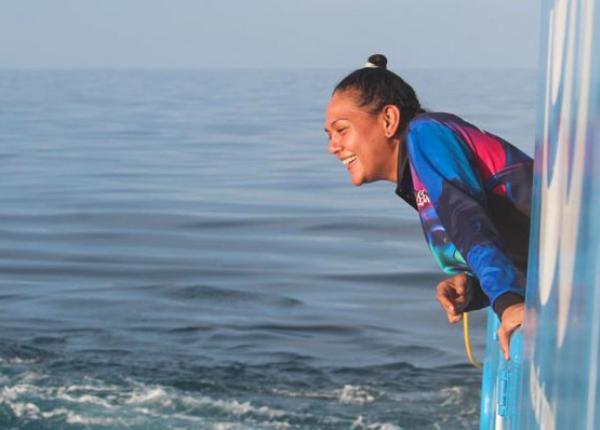
AIMS’ research vessels are equipped to take our scientists to some of Australia’s most remote and underexplored regions to help unlock their secrets. But it is our human connections that help us deepen our understanding of our submerged heritage and biodiversity in areas like West Cape York Marine Park.
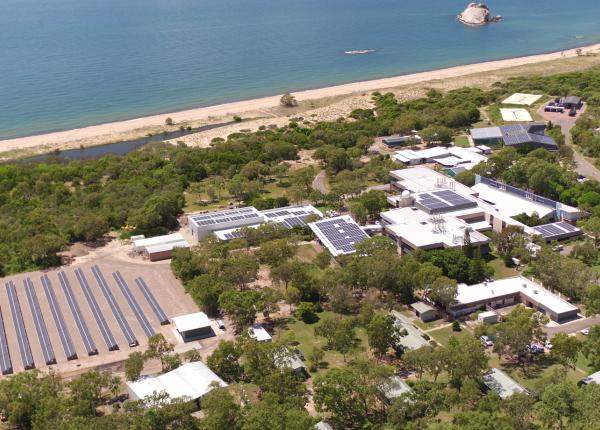
The Australian Institute of Marine Science (AIMS) has welcomed the $163.4 million funding announcement made by the Federal Minister for the Environment and Water The Hon. Tanya Plibersek MP at its Townsville headquarters this week. (Wednesday, 19 April).
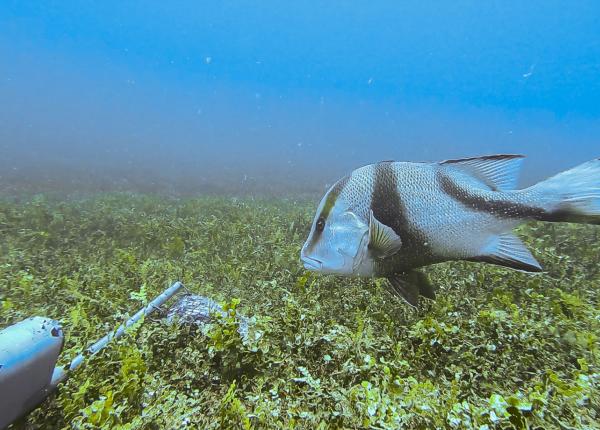
For the first time in a dedicated monitoring program, AIMS scientists and collaborators have deployed baited remote underwater video stations (BRUVS) across the length and breadth of the Great Barrier Reef, to find out what fishes are where.
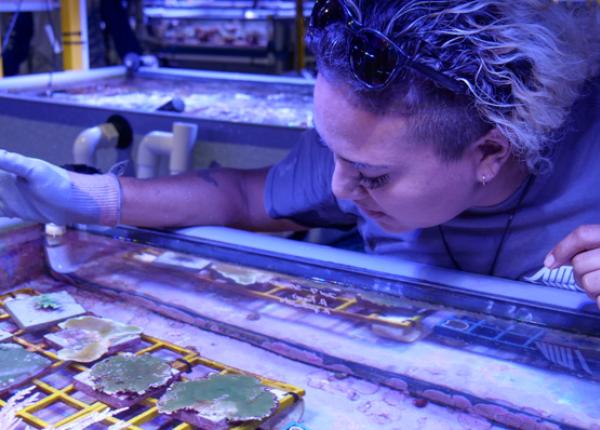
AIMS aquaculture trainee and Woppaburra woman Jamiga-Marie Cummins returned to sea Country for coral spawning as part of the Woppaburra Coral Project.
Tagging technology that enables large marine animals to effectively become ocean-going explorers are helping scientists and Indigenous rangers learn more about threatened turtle species and remote ocean environments off the Northern Territory coast.
Researchers are using DNA technology to enhance their ability to detect coral-eating crown-of-thorns starfish before they cause destruction on the Great Barrier Reef.
New research has found corals in the Keppel Islands of the southern Great Barrier Reef survived and recovered from a severe bleaching event in 2020, indicating the high resilience of corals in the region.
New research has uncovered a complex picture of both loss and gain within the microalgal communities of corals after the 2016 Great Barrier Reef mass coral bleaching.
A consortium of world-renowned vessel designers has been appointed by the Australian Institute of Marine Science (AIMS) to complete the detailed design of a new state-of-the-art marine research vessel.
The Australian Institute of Marine Science (AIMS) has appointed new research leaders to enhance its world-leading scientific research in Australia’s tropical marine estate.