
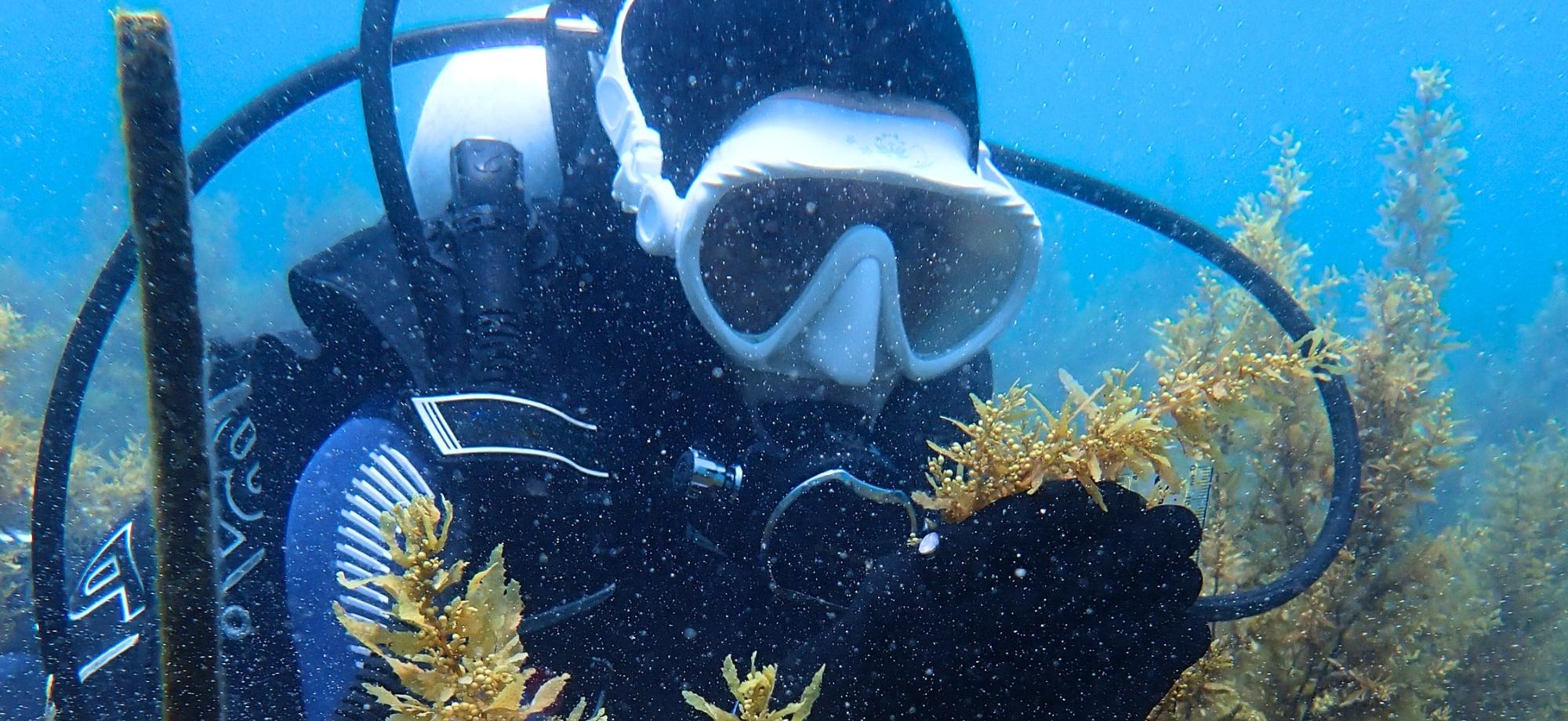
On inshore reefs, one of the biggest challenges for coral reefs is the rapid growth of macroalgae – more commonly known as "seaweed". After a disturbance, corals can bleach and die, and their skeletons become new surfaces for macroalgae to colonise.
Fast-growing macroalgae compete with corals for light, space and nutrients. They can also trap sediment that smother young corals, release chemicals that slow coral growth, and promote microbes that increase coral stress or disease. For young corals this competition can be especially tough. Yet these early coral life stages are critical for reef recovery, so understanding what holds them back can inform coral reef restoration efforts.

The challenge of macroalgae in reef restoration
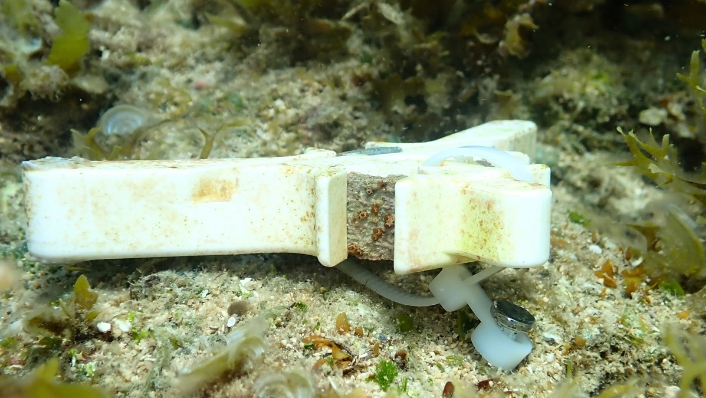
To give baby corals a head start, AIMS scientists have developed coral seeding devices that house and protect them, helping them survive once they are deployed back onto the Great Barrier Reef. However, despite providing added protection, the effectiveness of these devices can still be impacted by surrounding macroalgal growth.
New research at AIMS will explore which traits of macroalgae make it difficult for young corals to survive and grow. This study will look at several factors, including: the amount of macroalgal cover, the distance between young corals and macroalgae, the height of macroalgae, and how many different types of seaweed are present.
The findings from this research will be incorporated into the AI models which are being developed to help scientists select the best locations and conditions to deploy these devices for effective reef restoration across the Reef.
Macroalgal experiments with corals spawned in 2026
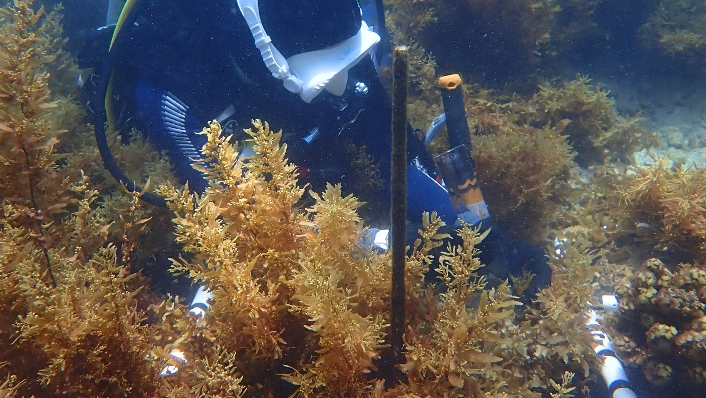
Last year, we tested the impact of macroalgae on young corals in the Palm Islands. This reef-based research looked at both the settlement of wild coral larvae and the success of young corals reared in our National Sea Simulator (SeaSim) and deployed via coral seeding devices. Data were collected on the corals themselves and the traits of the macroalgae growing nearby.
Building on these initial results, which identified several macroalgal metrics associated with coral survival, this year AIMS researchers will focus on one particular trait that showed interesting results in the field: macroalgal height.
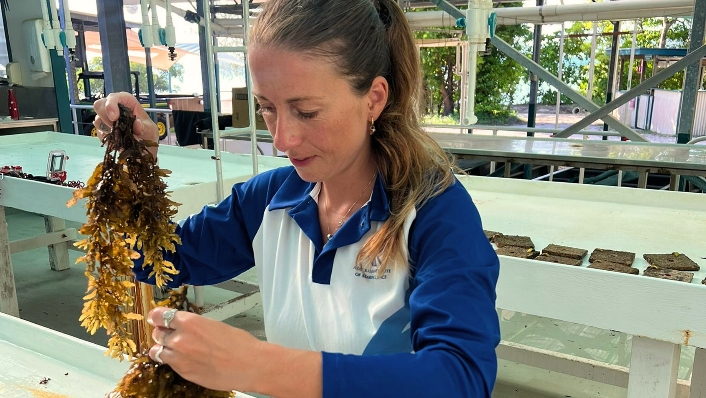
Baby corals spawned in the SeaSim will be settled and reared, then moved into tanks containing Sargassum seaweed of different heights. Their growth and survival will be monitored over several weeks to investigate how different macroalgal heights affect coral performance, and whether there is a threshold beyond which coral growth or survival begins to change.
This study will also investigate whether the relationship between macroalgal height and coral growth is affected by warmer temperatures. While half the tanks will be kept at a consistent ambient temperature, the other half will be subjected to a gradual ramping up of temperature over the study period – reflecting the scenario of a warmer future climate.
More broadly, this research forms part of scientists' growing understanding of how macroalgae impacts coral growth. Rather than simply looking at the amount of seaweed coverage on the sea floor, it is becoming increasingly clear that several traits related to the macroalgae are important.
Seaweed is a natural feature of the reef, living in balance with corals. By knowing how macroalgae and corals interact, we can better understand the balance required for reef ecosystems to thrive.
Researchers
Greta Zampa (AIMS@JCU)
Dr Carly Randall (AIMS)
Dr Muhammad Abdul Wahab (AIMS)
Dr Andrew Hoey (JCU)
Dr Guillermo Diaz-Pulido (Griffiths University)
This research is supported by:
AIMS
James Cook University
Morris Family Trust
This page was updated in October 2026.


