
The challenge
Coral reefs depend on microscopic algae living inside their tissues. These algae supply much of the energy corals need to grow and survive.
As marine heatwaves become more frequent, scientists are searching for ways to better understand why some coral-algal partnerships are naturally more resilient than others.
While heat-evolved strains of coral algae have already been shown to improve coral survival under heat stress, the cellular mechanisms behind this resilience remained largely unknown.
Bringing Australia's research capability together
As part of his PhD at the University of Melbourne, Bede Johnston worked through the Reef Restoration and Adaptation Program (RRAP) to investigate the hidden chemistry behind heat-tolerant coral algae.
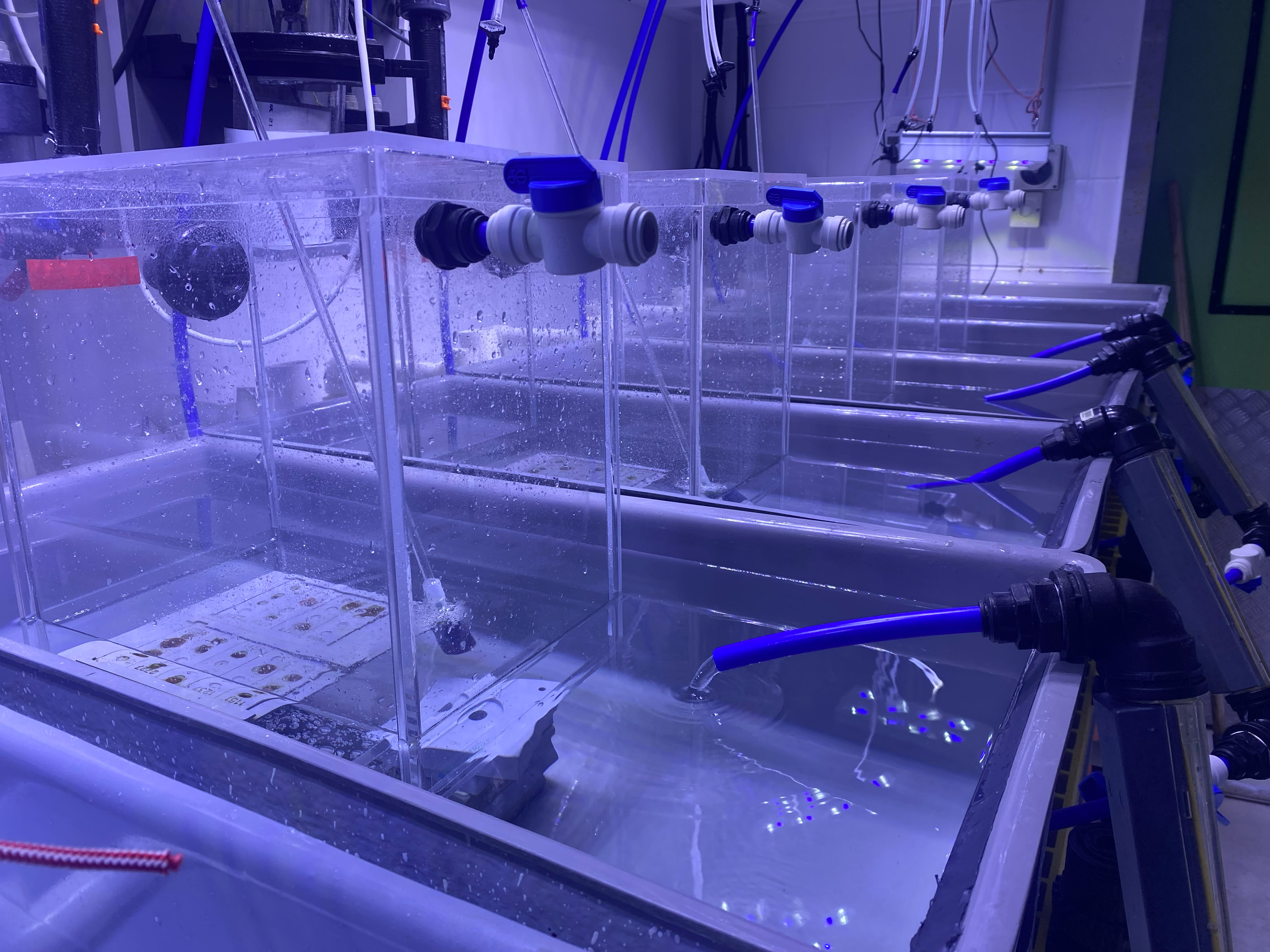
Experimental work was undertaken at the Australian Institute of Marine Science’s (AIMS) National Sea Simulator (SeaSim), where researchers can precisely control environmental conditions to simulate future ocean climates. Corals were bleached and then inoculated with heat-evolved strains of Symbiodiniaceae algae that enhance thermal tolerance. These corals were then exposed to thermal heat stress in SeaSim experimental systems.
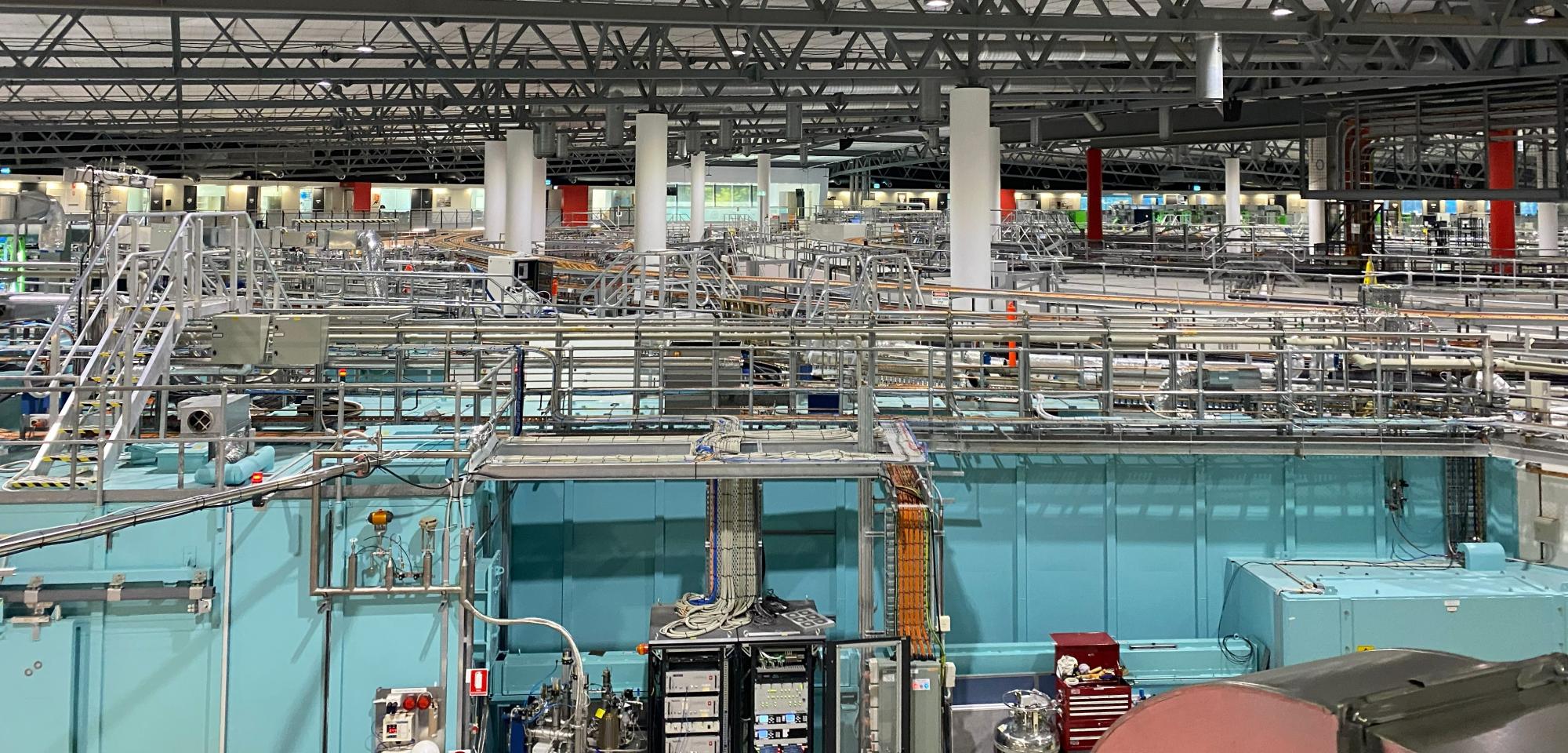
To examine what was happening inside individual algal cells, Bede successfully secured access to beamtime through ANSTO, providing access to the Infrared Microspectroscopy beamline at the Australian Synchrotron in Clayton, Victoria.
The Australian Synchrotron is one of Australia's major research infrastructure facilities, providing access to powerful X-ray and infrared light for experiments that cannot be performed using conventional laboratory equipment. Its beamlines enable researchers to investigate materials at molecular and atomic scales across disciplines including environmental science, health, agriculture and advanced materials.
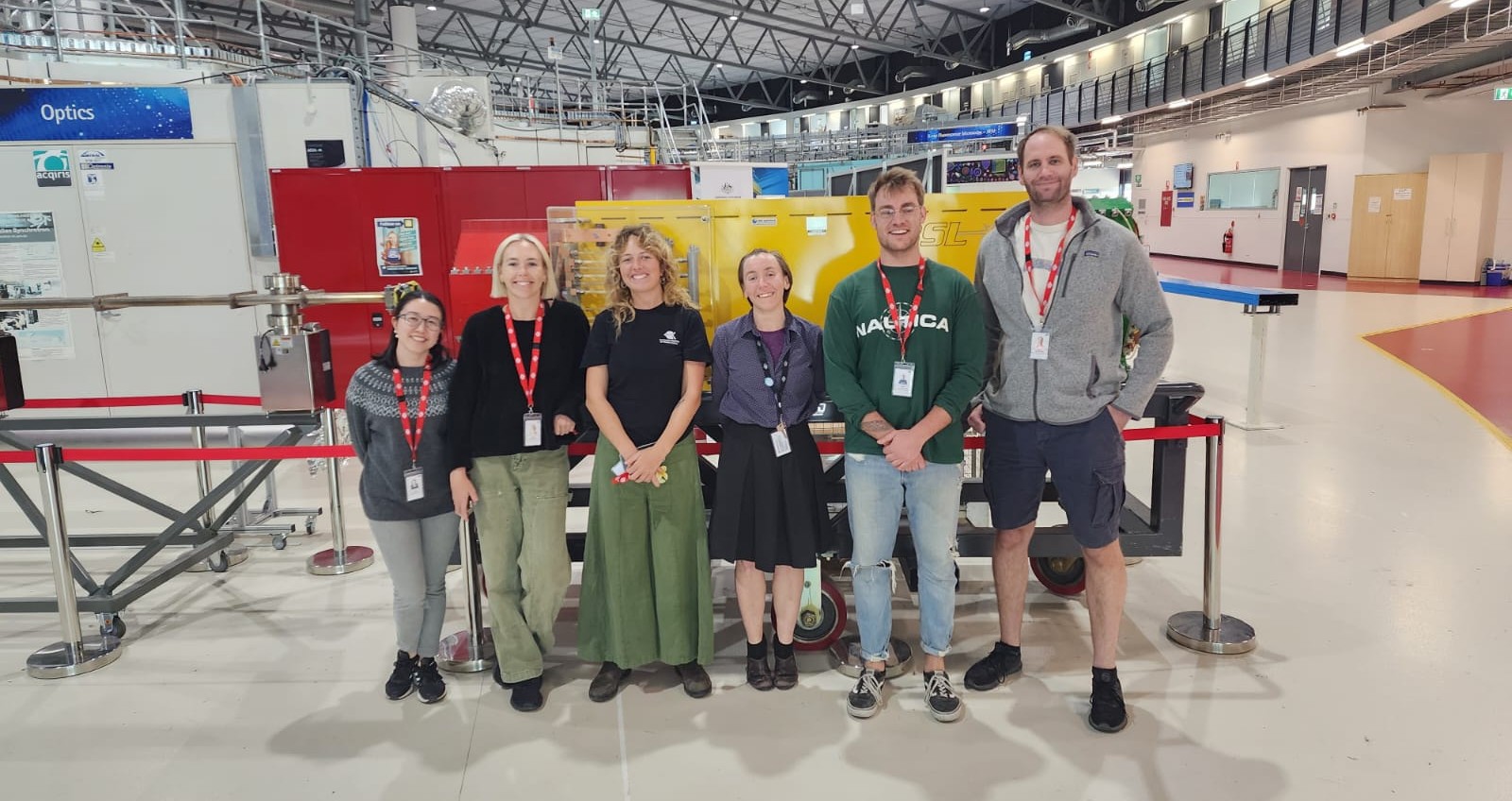
The collaboration brought together complementary expertise across two nationally significant research infrastructure organisations, demonstrating how Australia's research infrastructure network enables researchers to access specialised capabilities across institutions.
Looking inside a single cell
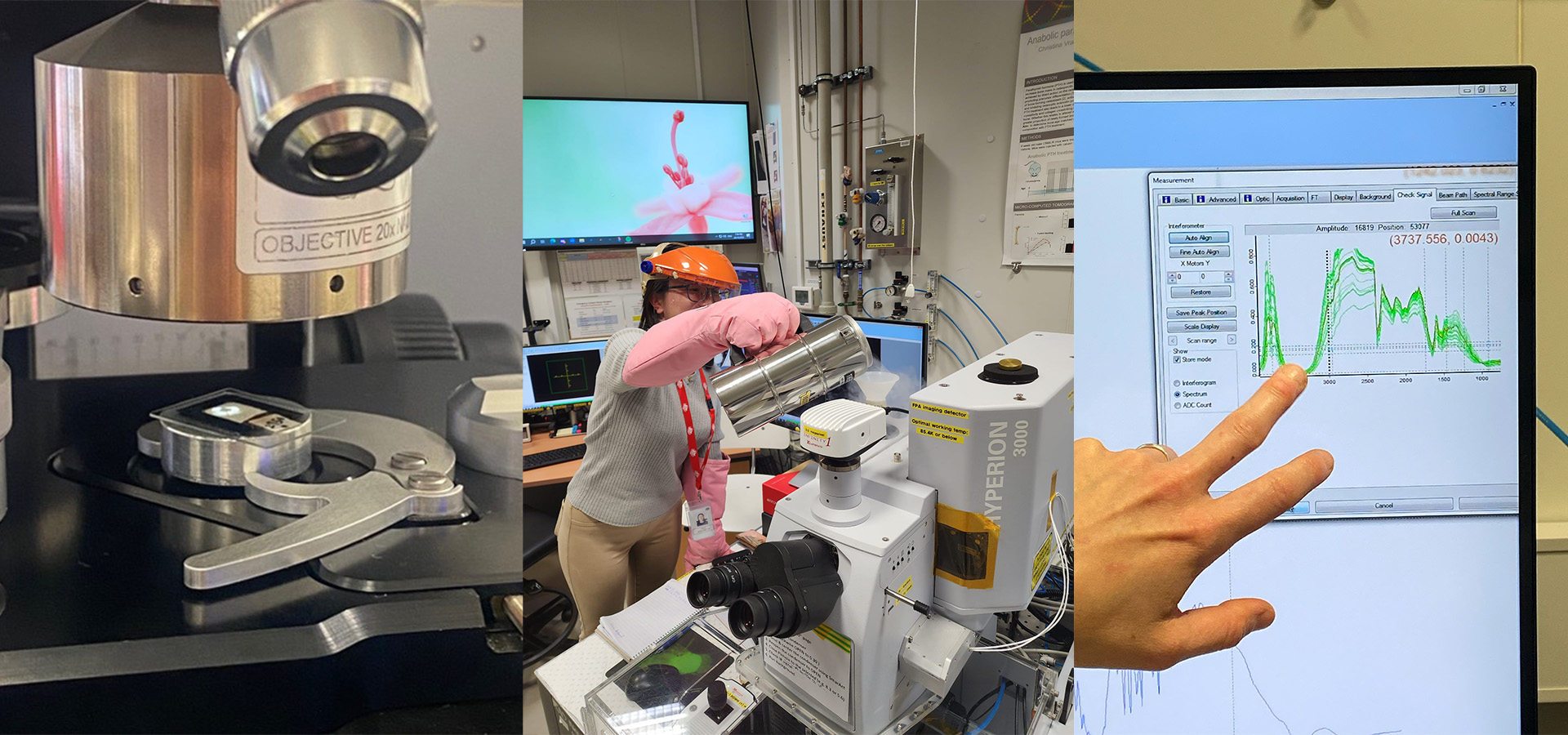
Using synchrotron-based Fourier Transform Infrared (FTIR) microspectroscopy, researchers generated detailed biomolecular fingerprints from individual algal cells.
Synchrotron light, more than many million times brighter than sunlight, allowed scientists to measure proteins, lipids, carbohydrates and other biomolecules at the single-cell level.
Researchers compared heat-evolved and wild-type algae in three different physiological environments:
- living inside coral tissue
- growing in laboratory culture
- after being expelled from the coral host
The findings
The study found that heat-evolved algae maintained a far more stable metabolic profile under elevated temperatures than wild-type strains.
Rather than experiencing widespread biochemical disruption, heat-evolved algae showed comparatively muted changes to proteins, lipids and other key biomolecules. These findings help explain the cellular basis of the enhanced thermal tolerance observed in corals hosting these strains.
The resulting biomolecular fingerprints provide a detailed picture of how heat-evolved and wild-type coral symbionts respond to thermal stress across different physiological contexts.
You can read the full publication here.
Why collaboration matters
This project demonstrates how Australia's research infrastructure ecosystem enables discoveries that no single facility could achieve alone.
SeaSim provided the sophisticated experimental environments needed to rear the larvae and then expose corals and their symbionts to controlled heat stress, while ANSTO's Australian Synchrotron enabled researchers to observe biomolecular changes occurring inside individual algal cells.
By combining complementary expertise and infrastructure, the researchers could connect whole-organism responses with molecular-scale evidence, generating new insights into the mechanisms underpinning coral resilience.
This kind of collaboration gives Australian researchers access to specialised capabilities across institutions and disciplines, helping tackle nationally significant challenges such as the future of Australia's coral reefs.
The Reef Restoration and Adaptation Program is funded by the partnership between the Reef Trust and the Great Barrier Reef Foundation.


