red coral image

AIMS scientists help take Great Barrier Reef restoration approaches global

Share this:

20 March 2026

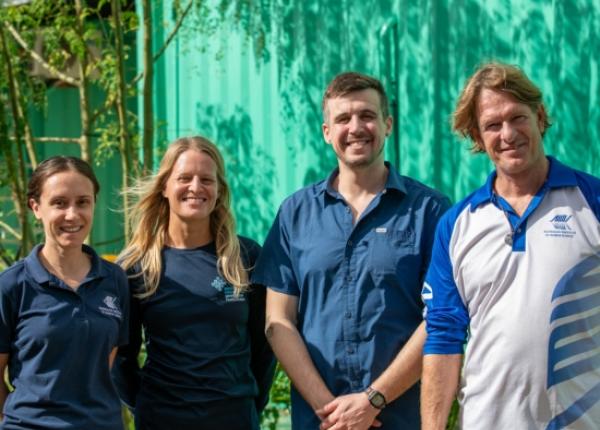
Efforts to improve and fast track large-scale coral reef restoration processes on Caribbean reefs are being supported by Australian Institute of Marine Science (AIMS) scientists as part of a new international collaboration.

Four scientists from AIMS and SECORE post for a photo
red coral image

AIMS takes first shot at largescale reef restoration with marine industry

Share this:

26 February 2026

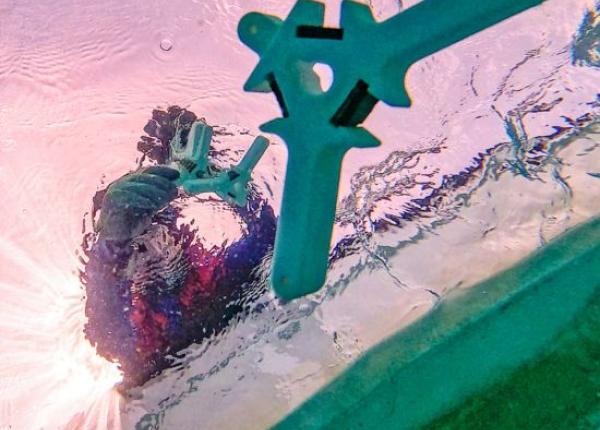
The Australian Institute of Marine Science (AIMS) and marine industry collaborators have deployed the final batch of aquaculture-reared young corals onto the Great Barrier Reef in the first year of a three-year program to test reef restorations methods.

Underwater shot looking up at coral seeding devices being deployed from a boat.
red coral image

Charcoal, breadcrumbs and grog make coral reef building tiles sustainable

Share this:

21 January 2026

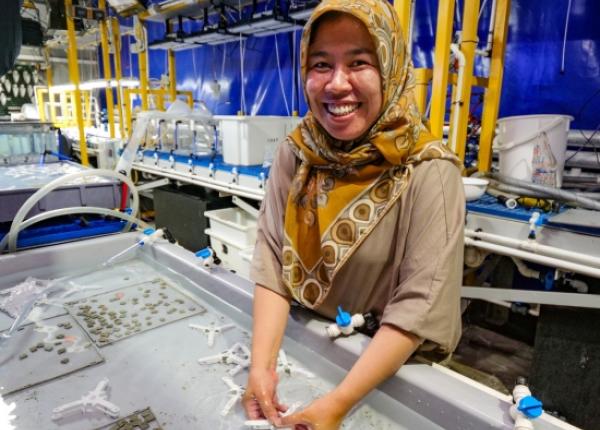
A crucial tool in large scale coral reef restoration can be made cheaply and with non-toxic waste materials which could encourage their uptake in developing countries, a new study has found.

Indonesian scientist assembling coral devices
red coral image

One of world’s largest reef restoration trials during Reef spawning

Share this:

12 December 2025

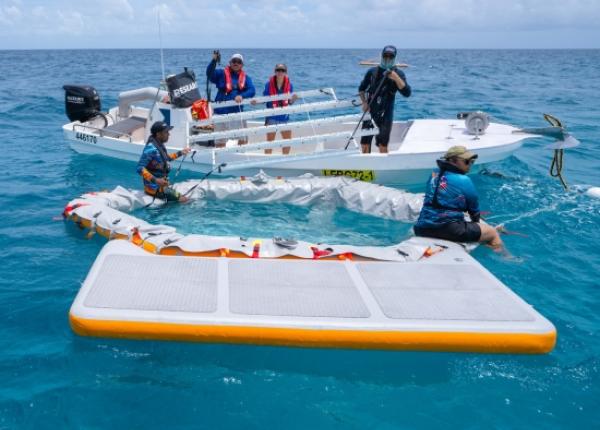
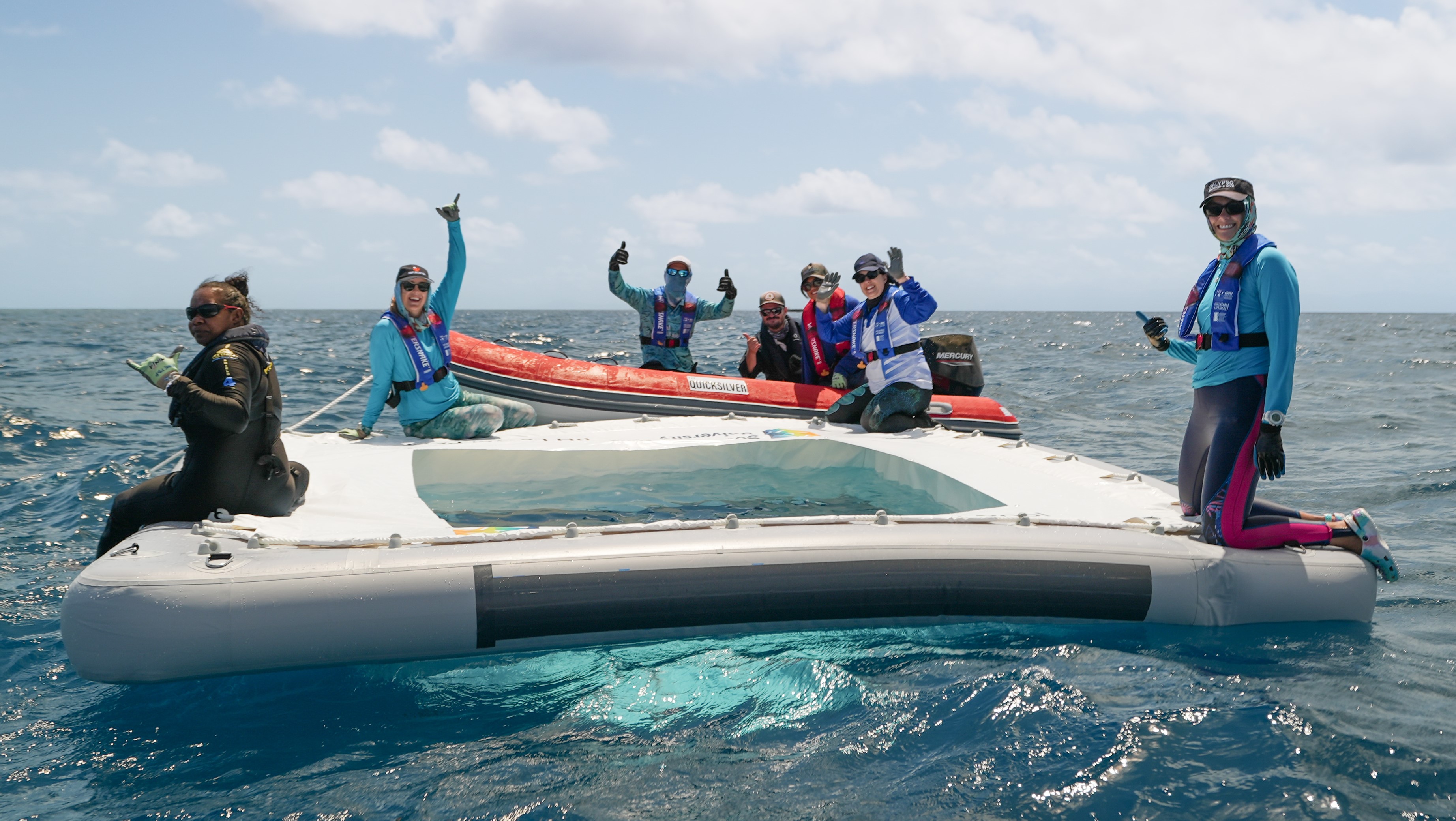
The Australian Institute of Marine Science (AIMS) has led one of the world’s largest reef restoration tests on a coral reef ecosystem during the recent mass spawning on the Great Barrier Reef.

Scientists setting up inflatable pool in tropical seas
red coral image

Science and Indigenous knowledge come together to help the Reef

Share this:

19 November 2025

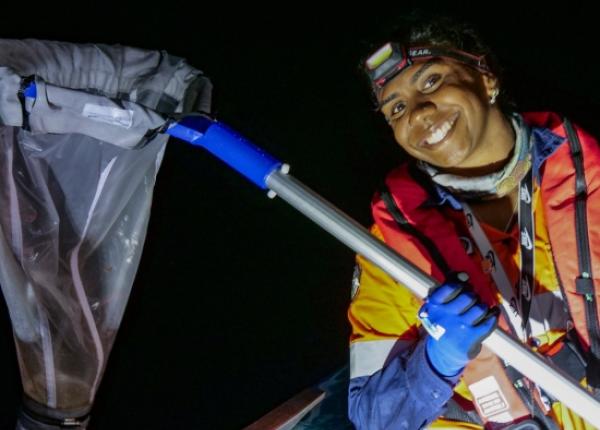
First Nations rangers are partnering with scientists from the Australian Institute of Marine Science (AIMS) to take restoration research out of the laboratory and onto the Great Barrier Reef (GBR) throughout November.  

Indigenous Ranger with net at sea at night

One of the greatest challenges of reef restoration on the Great Barrier Reef is its vast size. AIMS and its partners are meeting this challenge by bringing together the latest science, innovative technologies, and people power.

Components

Monitoring pilot deployments 

Monitoring of the young corals after deployments is essential to understand the efficacy of the methods, and inform future iterations.  Monitoring of sites will be conducted at multiple scales, and be carried out by science teams, industry and participating Traditional Owner groups. 

Manual and tech-based monitoring approaches such as ReefScan and photogrammetry will be used across the sites, with some surveys continuing after the three-year program concludes. 

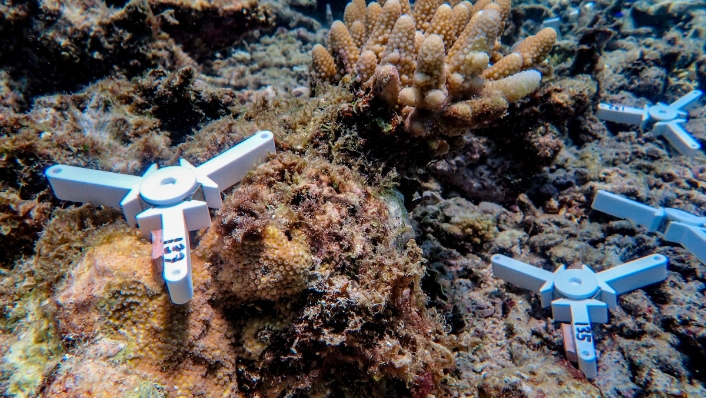
Coral seeding devices on a reef
Coral seeding devices on a reef. Image: Saskia Jurriaans

Device locations are geotagged and monitored in 6-month and 1-year intervals to measure retention, coral growth and survival. This data will help assess conservation aquaculture  and inform coral resilience research.   

People power behind the Pilot Deployments Program 

A key practical part of scaling up reef restoration is to empower local people and industries, by building skills, capacity and partnerships. 

One way to do this is by providing training in the advanced skills of reef restoration, with the intention that these skills will become increasingly valuable as reef restoration activities expand in the future.

In 2025, the Pilot Deployments Program established a Panel of Providers to deliver specific services and solutions over a three-year period. This includes coral seeding, monitoring and data collection.  The Panel of Providers has Traditional Owner representatives, as well as tourism and commercial reef operators, and members of the coral collection and aquarist industry.

Traditional Owners  

Traditional Owners hold important cultural and spiritual connections to Country, including sea Country on the Great Barrier Reef. These connections power deep knowledge and care for the Reef, and inherent rights and responsibility for its future.

The Pilot Deployments Program works closely with Indigenous communities. Free, prior and informed consent is obtained through Traditional Owner engagement before any Pilot Deployments Program activities. 

For example, the AIMS-led Indigenous Futures Project works in partnership with Indigenous Ranger groups and the Pilot Deployments Program. Its goal is to empower Traditional Owners to lead in caring for sea Country through reef restoration techniques. A pilot group of Indigenous Rangers are being trained in advanced skills for reef interventions, enabling them to lead these activities within their ranger groups for the future of sea Country when and where required. 

Indigenous Rangers on two boats in tropical waters
Indigenous Futures participants near Heron Island in 2024. Image: Phil Schouteten

Technological advances for Pilot Deployments Program 

Several technologies have been pioneered and refined for use in Pilot Deployments Program operations. Technological advances will continue based on feedback from early Pilot Deployments Program data. Some examples of technologies which have already emerged include:

Management

The innovative approaches being developed within the RRAP and the Pilot Deployments Program contribute to a toolbox of options for future management needs. It is critical they are developed with this end-use in mind.

Pilot Deployments Program activities align with Reef protection objectives, regulations and permitting processes from the Reef Authority and the Queensland Department of Environment, Tourism, Science and Innovation (DETSI).

AIMS collaborates with both regulatory bodies to codesign and implement the trials, and continue R&D.

The Pilot Deployments Program is funded by the Australian Government’s Reef Trust, and led by the Australian Institute of Marine Science. It is part of the Reef Restoration and Adaptation Program, funded by the partnership between the Reef Trust and the Great Barrier Reef Foundation.  

Hide Title
Off
Search category
red coral image

New portable coral restoration system successfully road tested in the Maldives

Share this:

12 June 2025
red coral image

New portable system to aid coral reef restoration goes remote in the Maldives

Share this:

20 March 2025

A portable coral aquaculture system that can be packed away and moved in sea containers to remote areas to help with coral reef restoration is being put through its paces in the Maldives for the coral spawning season.

red coral image

It’s that time of year again – baby coral joy at AIMS’ SeaSim

Share this:

23 October 2024

Scientists at the Australian Institute of Marine Science (AIMS) are currently preparing for the annual ‘mass’ spawning of Great Barrier Reef corals – an important time of reproduction and rejuvenation on the Reef.

red coral image

Innovative remote sensing model to boost coral reef restoration efforts

Share this:

22 August 2024

Researchers from the Australian Institute of Marine Science have developed an advanced remote sensing model that will significantly enhance efforts to manage and restore coral reefs.

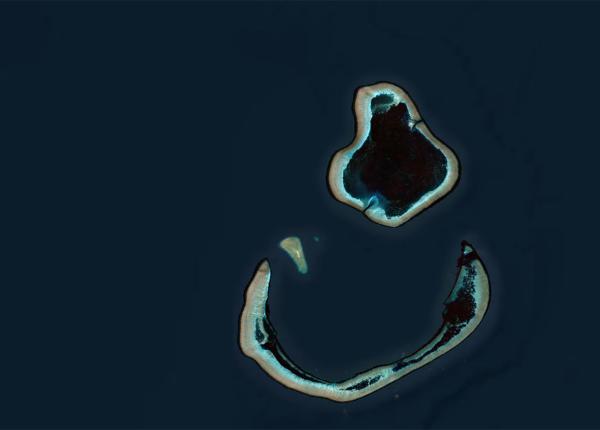
A satellite image of Scott Reef off Western Australia