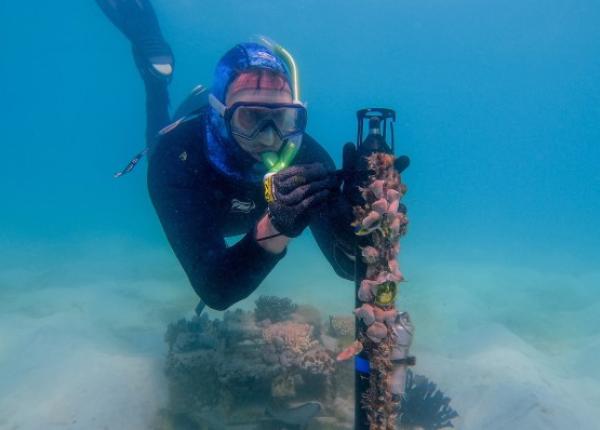
Australia and Brunei Darussalam are sharing innovative coral reef monitoring technology to help protect reefs in the face of increasing climate change and local ocean pressures.
We know that noisy reefs are healthy, but carefully listening to the sounds made by fish, invertebrates and humans underwater can help us understand the details better, such as changing diversity, distribution and abundance of species. There might even be new species to identify in the cacophony.
A portable coral aquaculture system that can be packed away and moved in sea containers to remote areas to help with coral reef restoration is being put through its paces in the Maldives for the coral spawning season.
Small, hidden crabs may be the missing link influencing coral-eating starfish populations, according to a study published in the prestigious Proceedings of the National Academy of Science of the United States of America (P
We can now automatically process and classify data about large areas of the sea floor thanks to a transformative machine-learning method developed by AIMS.
This International Women’s Day we celebrate legendary AIMS ecologist Dr Katharina Fabricius who swapped coral reefs for icebergs recently to join the Homeward Bound expedition to the Antarctic.
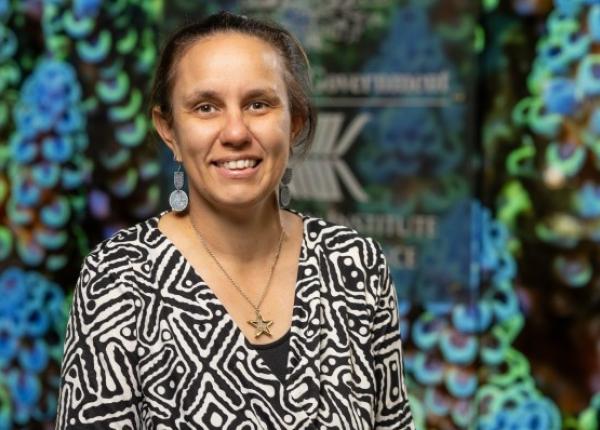
An accomplished First Nations marine scientist from Queensland has been appointed to the Australian Institute of Marine Science (AI
Endangered pygmy blue whales dive to depths in the ocean to forage and feed along their migratory path off the Western Australian coast