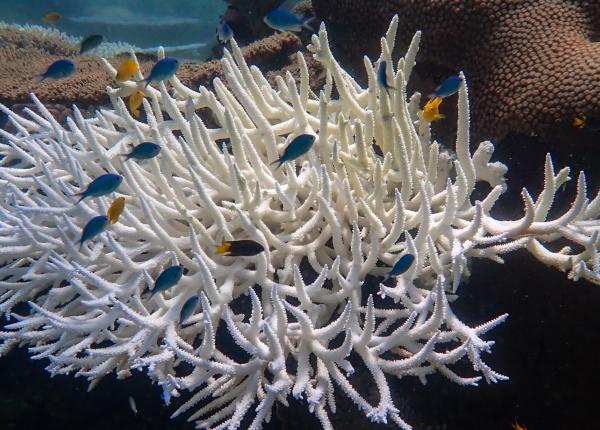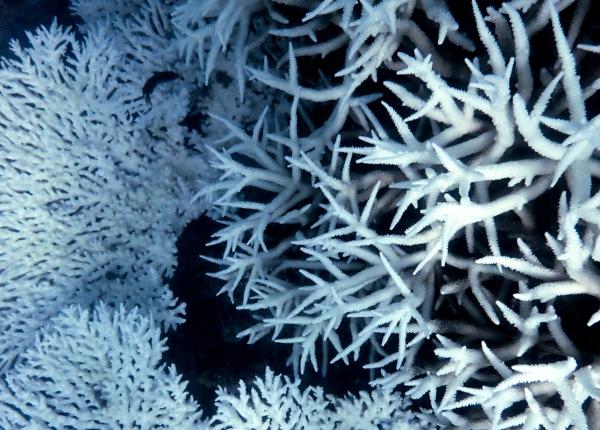

The fourth global coral bleaching event, announced this week, is an urgent wake-up call to the world.
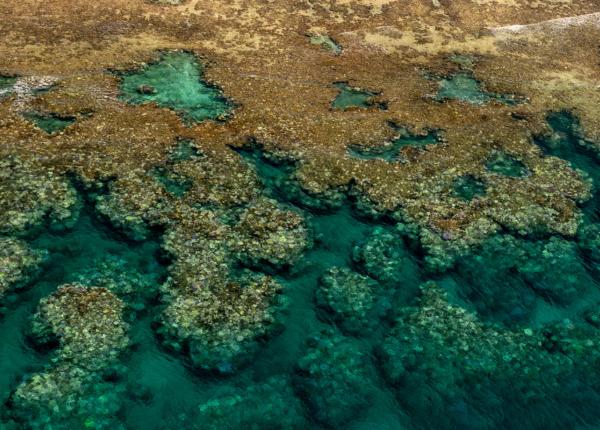
The 2023−24 summer has seen substantial climate driven impacts across the Great Barrier Reef, with widespread coral bleaching, two cyclones and several severe flood events.
The declaration of a global coral bleaching event indicates the increasing pressure climate change is having on reef systems around the world.
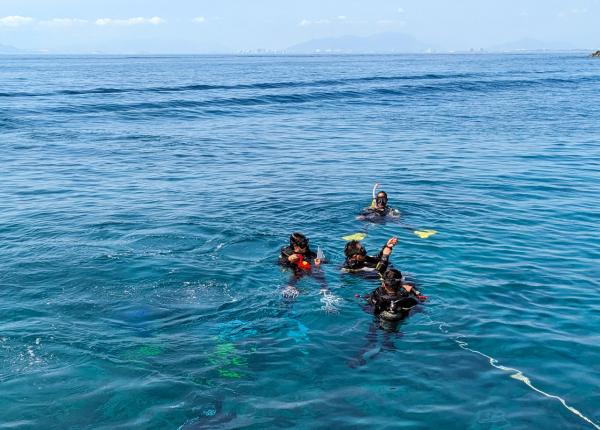
New AIMS-developed reef monitoring technology is now being used by scientists in Vietnam.
With marine heatwaves of varying severity identified in Australian waters over the summer, a new study of a remote coral reef in the north-west has found that they can recover from bleaching events caused by heatwaves, and other disturbances, as long as there is enough time.
Bleaching can suppress reproduction in a common coral species found in the Great Barrier Reef, hampering future reef replenishment.
An AIMS team led by scientist, Dr Neal Cantin, has installed underwater loggers at three key tourism sites. The loggers expand the existing network of temperature sensors AIMS has along the Reef. The scientists have additional help thanks to local tourism operators, whose regular trips to the sites help keep the loggers maintained and the science on track.
Australian Institute of Marine Science (AIMS) experts stepped up research on the Great Barrier Reef early this summer to learn more about the effects of heat stress on corals, to assist reefs in the future
AIMS has played a guiding role in helping Samoa draft the design of a national coral reef monitoring program to standardise and integrate local monitoring efforts.