How do the world’s largest fish – whale sharks – reach such immense sizes when they feed on some of the smallest prey in the ocean? The answer, according to a new study, is that whale sharks are...
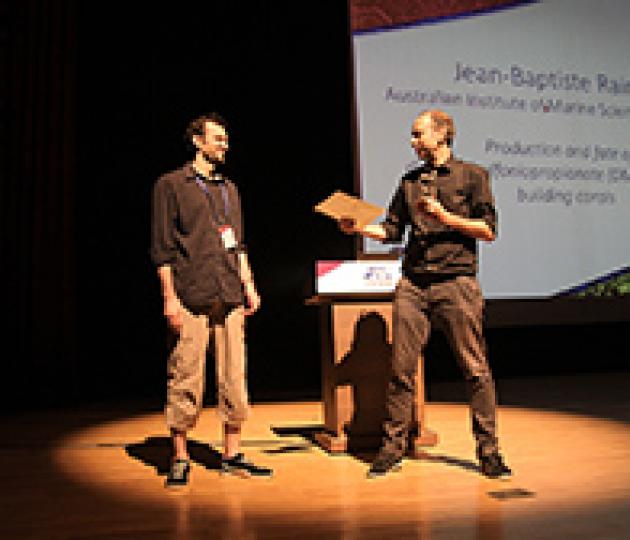
Microbial ecologist and former AIMS@JCU student Jean-Baptiste Raina was awarded the Tom Brock Postdoctoral Award for the most innovative research by an early career scientist at the 15th...
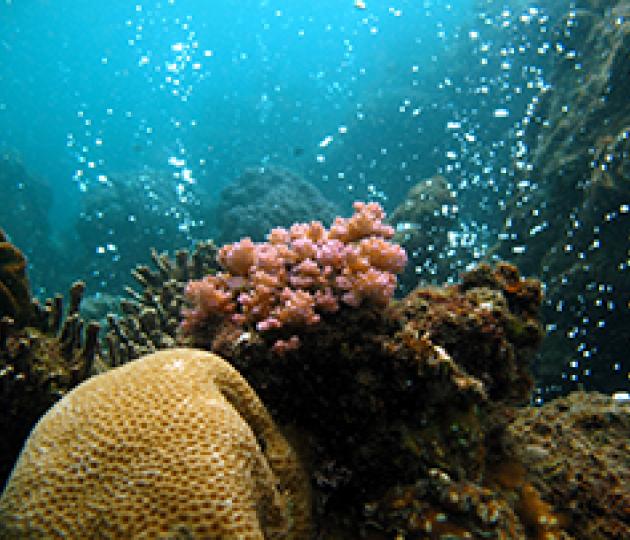
Coral bleaching, caused by a rise in sea surface temperature, is one of the major contributors to coral loss worldwide. But what happens when corals are exposed to both warmer oceans and carbon...
Researchers at the Australian Institute of Marine Science have been studying the unique communication methods of baby coral reef fish to try and understand more about how animals ‘talk’ to each other.
Australia’s vast oceans are a vital part of the heritage, heart and economic future of our country. The value of this marine estate, from a source of recreation, to energy and food production, to...
More than fifty guests and building contractors attended a ‘topping out’ ceremony for the new $60.6 million Indian Ocean Marine Research Centre at The University of Western Australia’s (UWA)...
The quest to stabilize and restore coral reefs, a critical component of our ocean ecosystem, is receiving increased help through a unique research project supported by Paul G. Allen’s Vulcan Inc....
Human Assisted Evolution Applied to Increase the Resilience of Corals
The Australian Institute of Marine Science (AIMS) and James Cook University (JCU) are working with a team of US and other international researchers, to capture underwater videos of sharks and rays...
The Australian Institute of Marine Science (AIMS) and James Cook University (JCU) are working with a team of US and other international researchers, to capture underwater videos of sharks and rays at 400 locations from little-surveyed coral reefs around the world.