
The challenge
Australia’s ‘Biologically Important Areas’ (BIAs) are defined where species aggregate and carry out critical behaviours such as reproduction, feeding, migration and rest.
BIAs are considered during decision-making about human activities such as shipping, fishing, offshore energy development. However, due to limited empirical data at the time, some BIA delineations relied upon expert knowledge.
The approach
Scientific data obtained from satellite tags attached to threatened species has increasingly been collected in the years since BIA designation. As many of these species are wide ranging, this is the best way to obtain data on their movements and habitat use, but collecting this data is difficult and expensive.
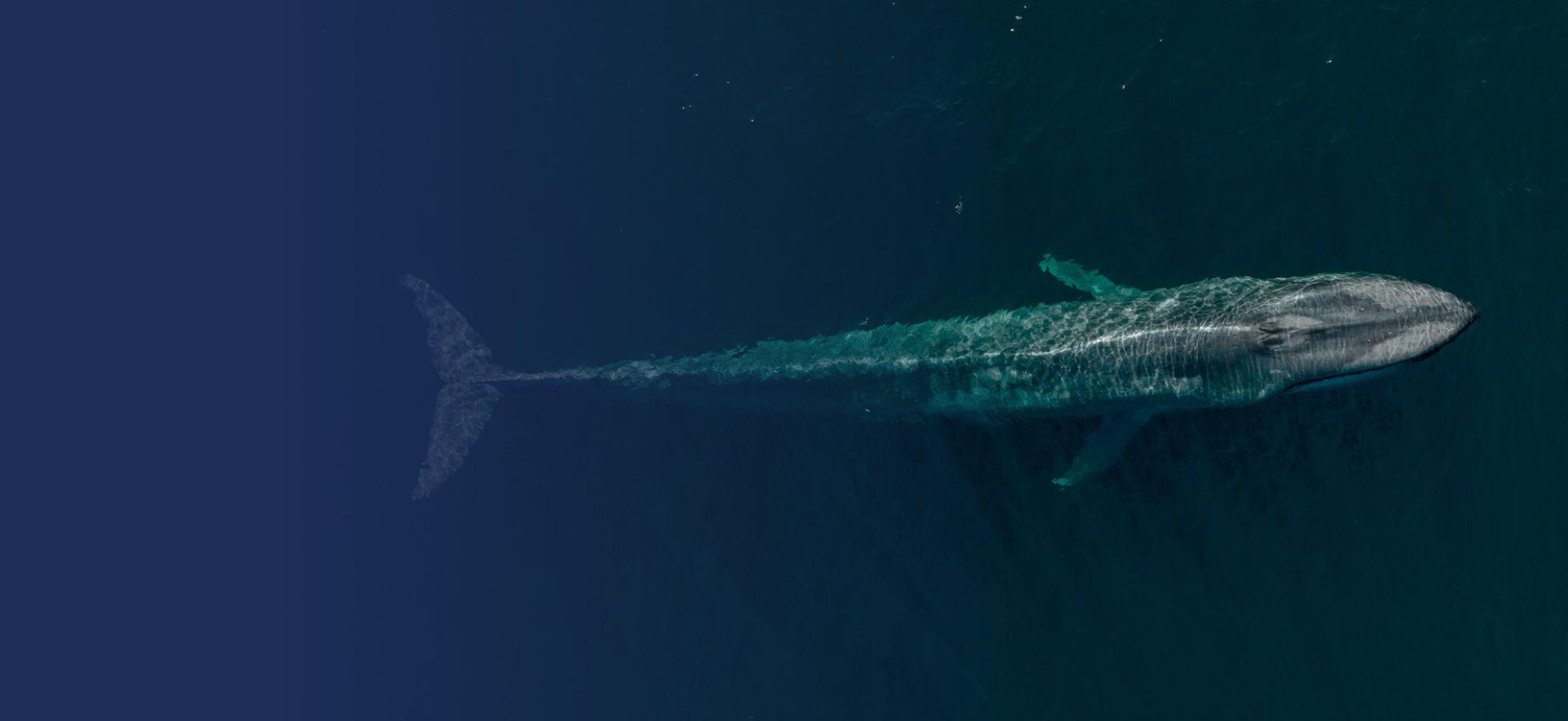
Australian Institute of Marine Science (AIMS) researchers, and collaborators, compiled all existing data from these tags and supplemented it with targeted new deployments of satellite tags to fill geographical gaps for species such as pygmy blue whales.
The team undertook quantitative analysis of the compiled data and found that the areas of importance for these species only partially overlapped with existing BIAs, indicating they may not reflect all areas important to the endangered species.
The impact
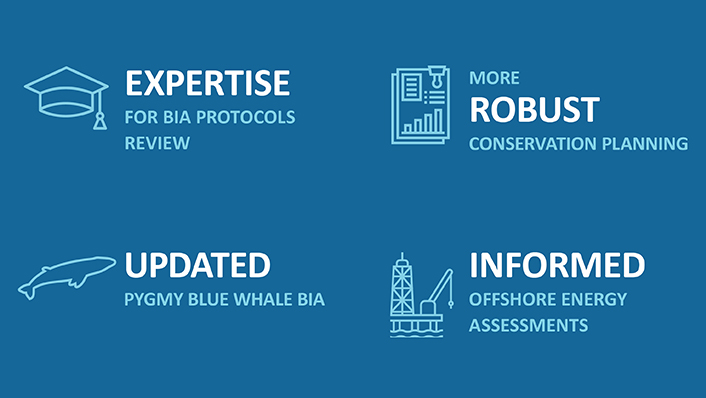
Following publication of the AIMS-led research, the Australian Government announced a review and update of the protocol for designating BIAs, and a review of the BIAs for several threatened species. AIMS scientists were on the expert panel that reviewed the pygmy blue whale BIA. They provided the satellite tagging data, that were combined with all available data for the species.
The newly defined BIA for pygmy blue whales will support more informed assessments of overlap with human activities and provide a stronger basis for helping manage potential threats. AIMS research is contributing to the review of BIAs for other species such as marine turtles, and contributes to the broader evidence base used to inform conservation planning in Australia. The National Offshore Petroleum Safety and Environmental Management Authority and offshore energy companies are currently using the AIMS research findings to assess impacts of existing and proposed activities.
AIMS’ pygmy blue whale research was supported by Woodside Energy Ltd and Chevron Australia which is currently using the findings to avoid or minimise impact of its activities on the species. Santos previously supported the research through the Northwest Shoals to Shore Research Programme.
Banner photo: AIMS | Grace Russell.


