
The challenge
Traditional Owners have inherent rights and responsibilities for Sea Country.
While AIMS researchers had been engaging with Traditional Owners about our research, we wanted an organisation-wide shift from engagement to genuine partnership.
The approach
In 2019, AIMS developed an Indigenous Partnership Plan (IPP) which enshrined the principle of Free Prior and Informed Consent.
That year, it was applied to the Woppaburra Coral Project: a five-year, $11 million research partnership which investigated coral reef restoration strategies in reefs around the Keppel Islands in the southern inshore Great Barrier Reef. It was undertaken in partnership with the Woppaburra people, the Traditional Owners of the Keppel Islands whose ancestors were removed from the islands in 1902.
Beyond its scientific aims, the project embedded partnership activities designed to foster mutual respect, cultural exchange, and long-term impact.
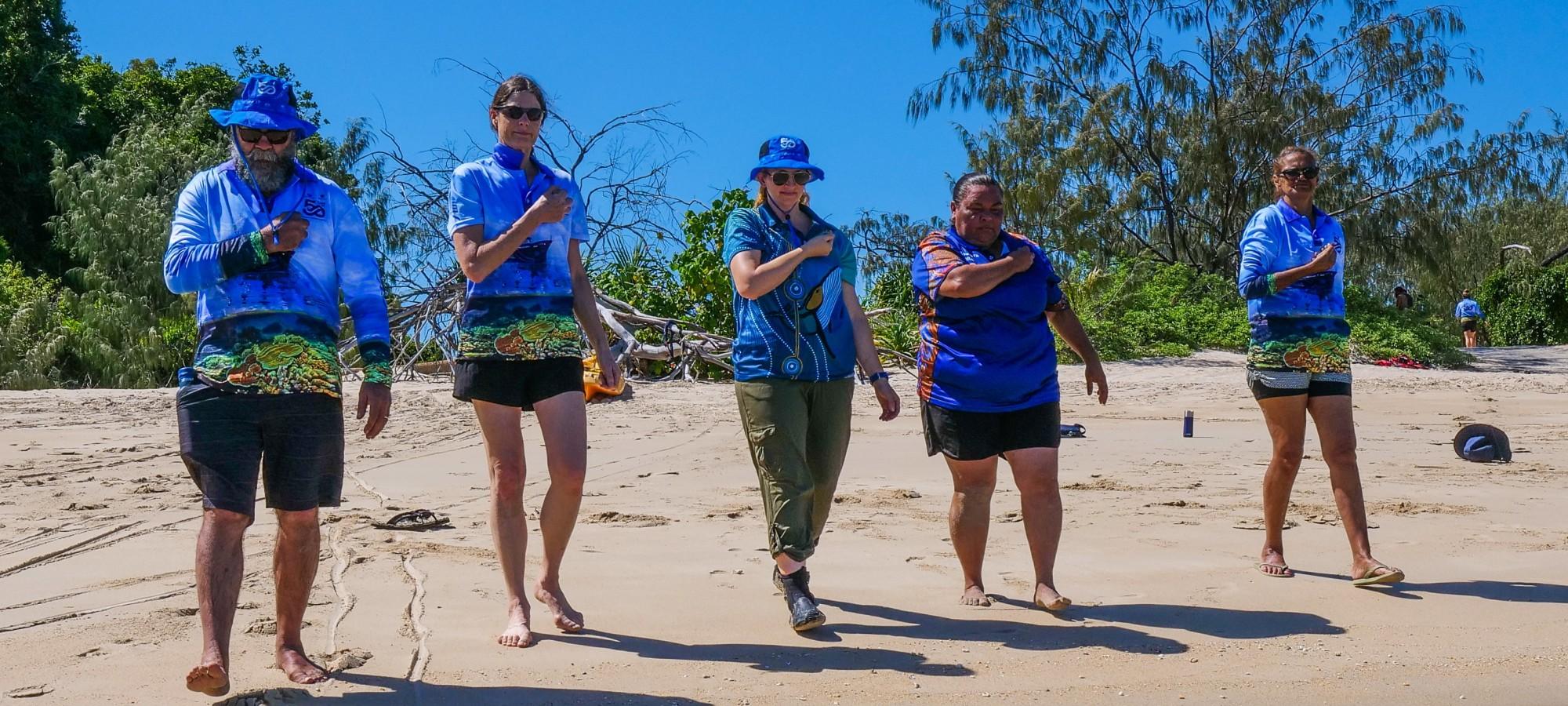
Activities included on Country workshops with 99 Woppaburra descendants, 28 of whom were visiting Country for the first time. They undertook hands-on coral spawning and aquaculture research.
AIMS collaborated with Social Ventures Australia (SVA) to undertake a social value analysis when the project concluded in June 2024.
The impact
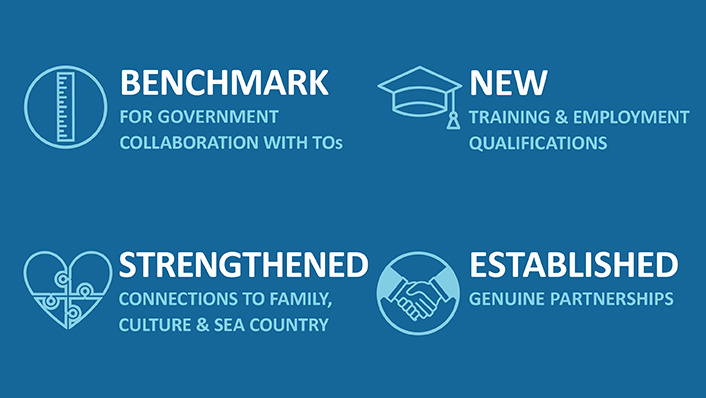
The social values study found the project set a new benchmark for collaboration between government agencies and Traditional Owners, creating significant social, economic and cultural value.
For the Woppaburra people, the opportunity to return to Country was deeply healing and strengthened connections to family, culture and sea Country.
The project also supported aspirations for training and employment, with tangible outcomes including new qualifications and increased confidence to pursue careers on Country.
For AIMS, the project catalysed institutional change. It demonstrated the value of Indigenous partnerships, not only in achieving scientific outcomes but in enhancing cultural competence, ethical research practices, and organisational reputation.
The analysis identified 24 material outcomes across six themes: establishing a genuine partnership, returning to Country, building pathways, learning about marine science, learning about Woppaburra culture and sharing the partnership model.
While a single monetary figure couldn’t capture the depth and complexity of the outcomes, the analysis used financial proxies to help tell the story of value creation. For example, the return to Country activities alone were valued at approximately $6.4M, based on comparable healing programs.
The Woppaburra Coral Project was part of the Australian Coral Reef Resilience Initiative, in partnership with BHP.


