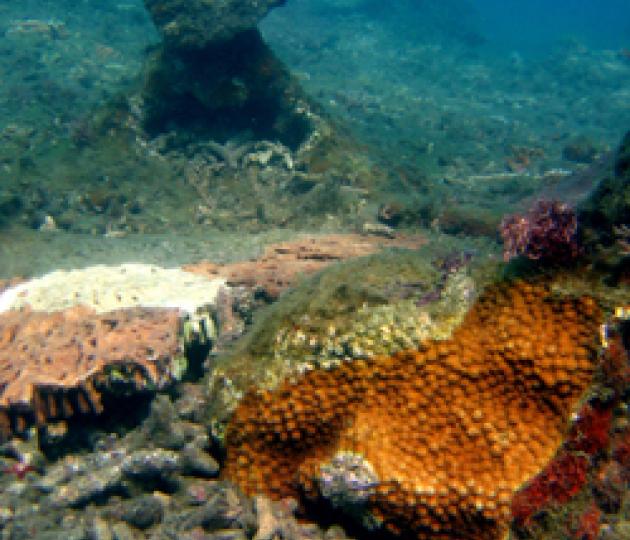
Increasing ocean acidification could lead to the extinction of an entire class of marine organisms by 2100 say a team of scientists from the Australian Institute of Marine Science.
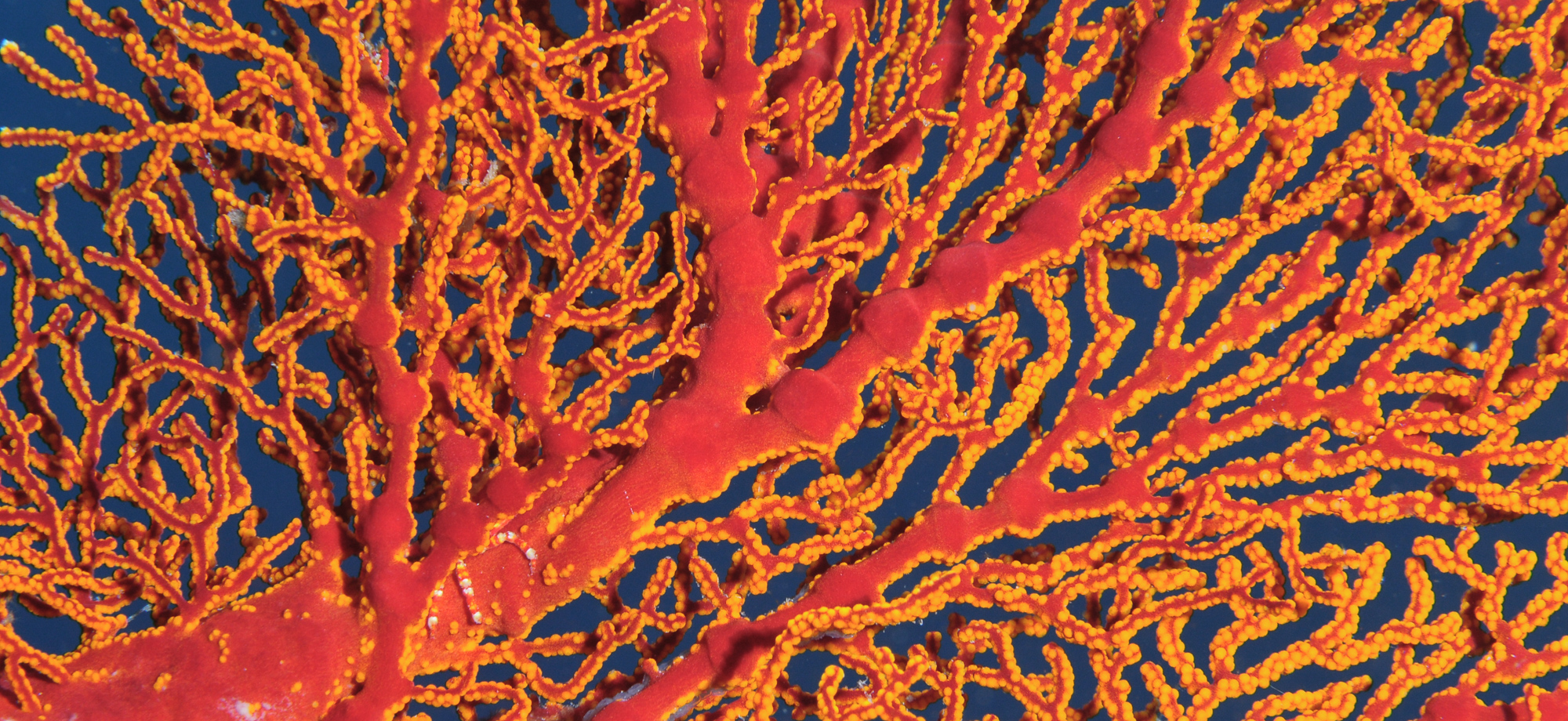
The Great Barrier Reef has lost half its coral cover in the last 27 years. The loss was due to storm damage (48%), crown of thorns starfish (42%), and bleaching (10%) according to a new study...
November 23, 2011 – for immediate release
The elusive culprits that are killing countless coral reefs around the world can now be nabbed with technology normally used to diagnose human diseases, marine researchers say.
MoU between AIMS and NOAA promises further research collaboration
Coral reefs can both positively and negatively influence the acidity of their surrounding seawater.
ARC Centre of Excellence for Coral Reef Studies
Australian Institute of Marine Science
An international team of scientists has achieved a major breakthrough in fishing sustainability on coral reefs which could play a vital role in preventing their collapse.
Most precise estimate ever is based on novel, validated analytical technique; Yet to be discovered, described, catalogued: 91% of marine species, 86% of species overall
Eight million, seven hundred thousand species (give or take 1.3 million).
The tropical waters of northern Australia, including Darwin Harbour, will attract even greater research interest as the Northern Territory economy expands, according to the CEO of one of Australia's leading marine research agencies.