A distinguished public servant from Canberra has been appointed to the Australian Institute of Marine Science's (AIMS) Council.
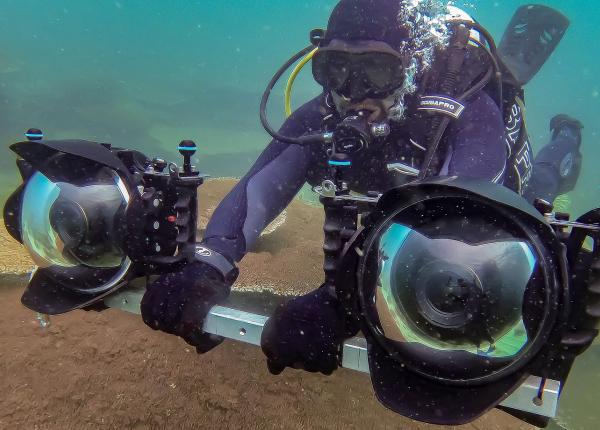
Photogrammetry is the scientific technique that can not only transport you into the delicate corners and crannies of the underwater world but enable AIMS scientists to measure large sections of the Great Barrier Reef. This is accelerating their ability to help vulnerable reefs recover and adapt to a warming climate.
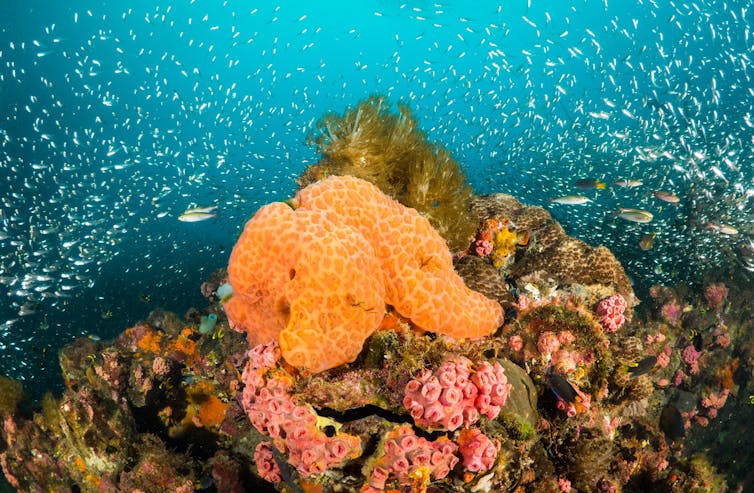
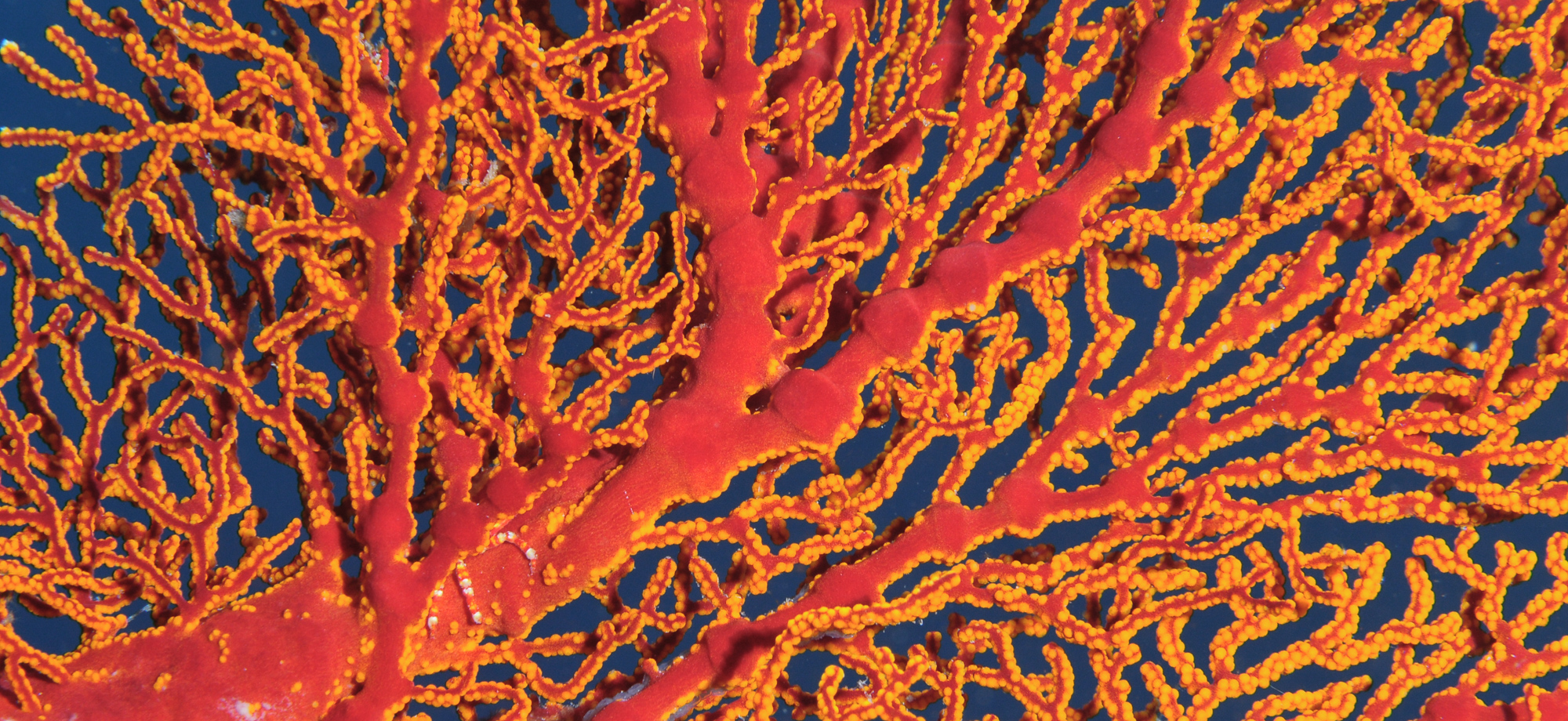
Coral scientists are squaring up to the dilemma of selecting which and how many coral species will have their future underwritten by cutting-edge reef restoration research.
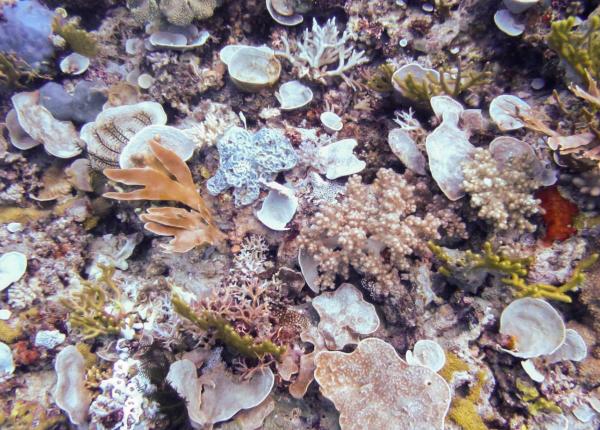
AIMS scientists are working with Southeast Asian and Pacific nations on a scalable approach to building coral reef monitoring capabilities.
The Australian Institute of Marine Science (AIMS) today announced that Chief Executive Officer Dr Paul Hardisty wi
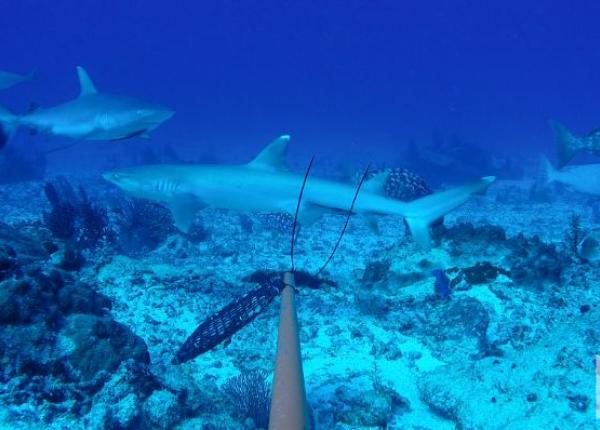
Sharks and rays found on Australian coral reefs are faring better than the same species in other countries, but populations are still being depleted where there is less protection from fishing, according to a new study co-authored by Australian Institute of Marine Science (AIMS) researchers.
The economic output of Australia’s marine industry continued to grow despite the effect of the COVID-19 pandemic restrictions on some sub-sectors, a new report released today by the Australian Institute of Marine Science (AIMS) shows.
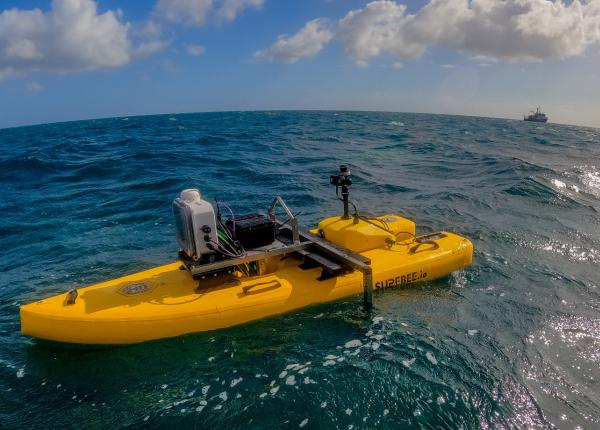
For the first time in Australia, autonomous marine technology developers have a location to safely test autonomous vessels without needing to apply for a permit.
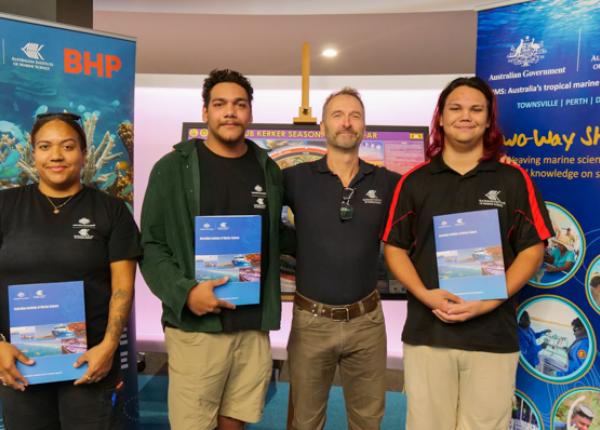
Four Indigenous aquaculture trainees who have been honing their skills at the Australian Institute of Marine Science (AIMS) have successfully completed an inaugural two-year training course and are now expanding their skills with work placements at the Townsville headquarters.