
Protecting a globally important reef and regional economy
Climate change is increasing the frequency and severity of marine heatwaves, placing the Great Barrier Reef under growing pressure. Researchers working in the National Sea Simulator (SeaSim) located at the Australian Institute of Marine Science (AIMS) are developing interventions to complement emissions reduction and reef management by helping reefs recover and adapt.
The 2025 AIMS Index of Marine Industry shows that Australia’s marine economy generated $229 billion in output, contributed $203 billion in total value added and supported more than 712,000 full-time-equivalent jobs in 2022–23. The Great Barrier Reef alone has an estimated economic, social and icon asset value at $56 billion. It is estimated that the Reef contributed $6.4 billion to the Australian economy and supported more than 64,000 jobs in 2015–16. These figures highlight the national importance of protecting the Reef.
Turning restoration science into operational capability
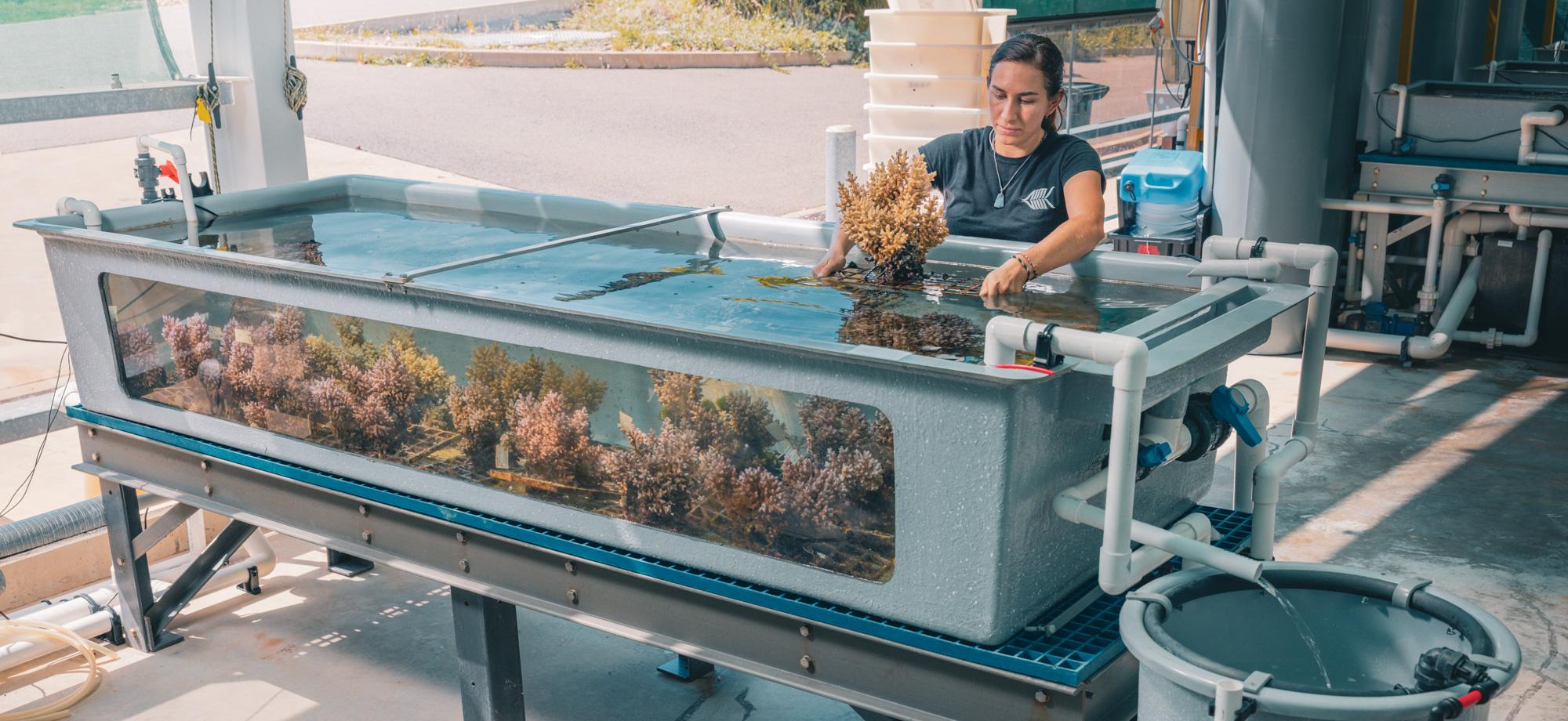
SeaSim, supported through NCRIS, provides the research infrastructure needed to move coral aquaculture from small scale experimental concepts towards industrial scale operational delivery. SeaSim supports the pathway from broodstock conditioning and spawning through larval rearing, settlement, grow-out and preparation for reef deployment.
This capability directly supports the Reef Restoration and Adaptation Program’s (RRAP) Pilot Deployment Program, which is testing end-to-end production and deployment of young corals on the Great Barrier Reef. Significant elements use engineering solutions, aquarium designs and operational knowledge developed within SeaSim over 12 years.
Automation for scalable and cost-effective coral aquaculture
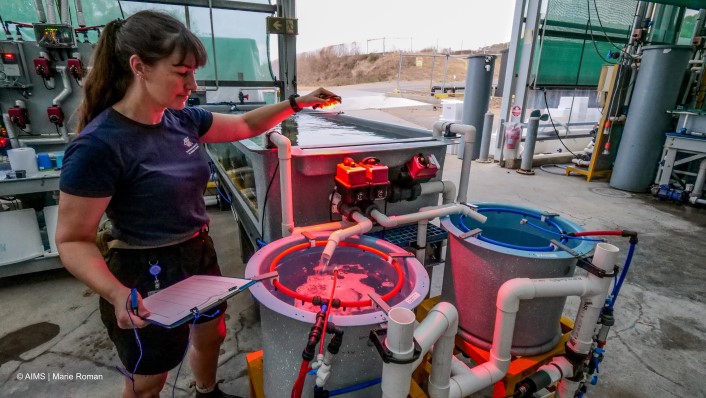
SeaSim’s industrial process-automation platform continuously controls and records seawater temperature, chemistry, flow, lighting and other environmental conditions, supported by 24-hour monitoring and alarms and experienced staff. SeaSim provides a collaborative environment where scientists, aquarists, engineers, technologists and industry partners combine different expertise to develop and validate solutions to pressing environmental challenges.
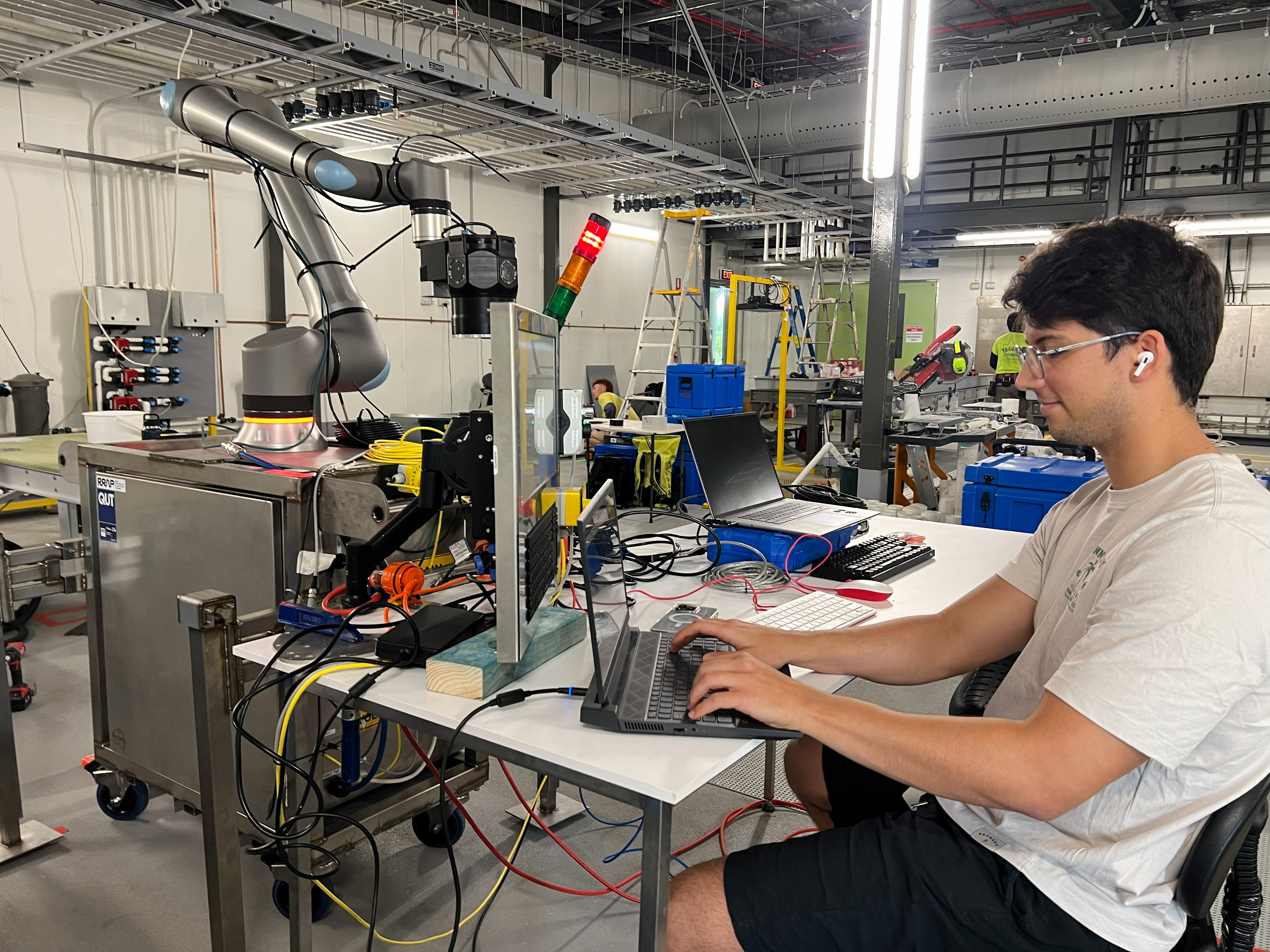
These technologies include the AutoSpawner, which automates coral gamete collection and fertilisation, can produce seven million or more fertilised eggs per unit in a spawning night and reduce labour costs eight- to 100-fold. The Coral Spawn and Larvae Imaging Camera System (CSLICS) uses networked cameras, computer vision and artificial intelligence to count and monitor larvae. The Coral Growout Robotic Assessment System (CGRAS) uses robotic imaging and AI to track juvenile corals on settlement tiles, reducing processing time from around 140 minutes to about 10 minutes.
Further along the production pipeline, McLaren Racing’s Accelerator Programme and the Great Barrier Reef Foundation developed the Device Assembly Machine, known as Machine One, for testing at SeaSim. It reduces coral-seeding-device assembly from up to 90 seconds to around 10 seconds, with potential to assemble 100,000 devices per week.
Why NCRIS investment matters
By integrating biology, engineering, digital systems and industry expertise, SeaSim is reducing production costs, improving consistency and survival, and building the foundations of an automated Australian coral aquaculture industry. NCRIS investment is translating research into scalable restoration capability, supporting rReef-dependent communities and industries, and positioning Australia as a global leader in coral restoration technology.
The Pilot Deployments Program is funded by the Australian Government’s Reef Trust and led by the Australian Institute of Marine Science. It is part of the Reef Restoration and Adaptation Program, funded by the partnership between the Reef Trust and the Great Barrier Reef Foundation.


