
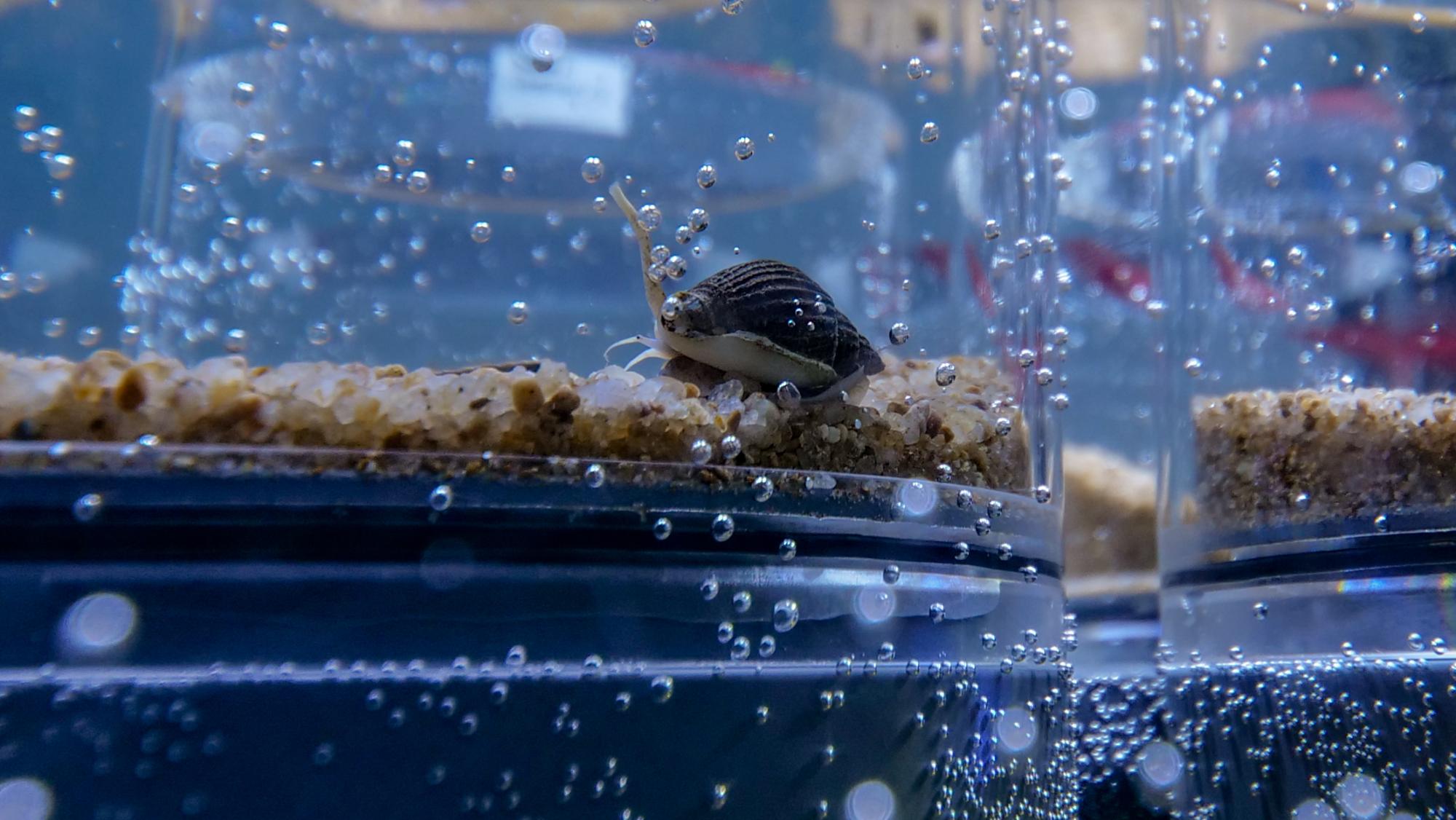
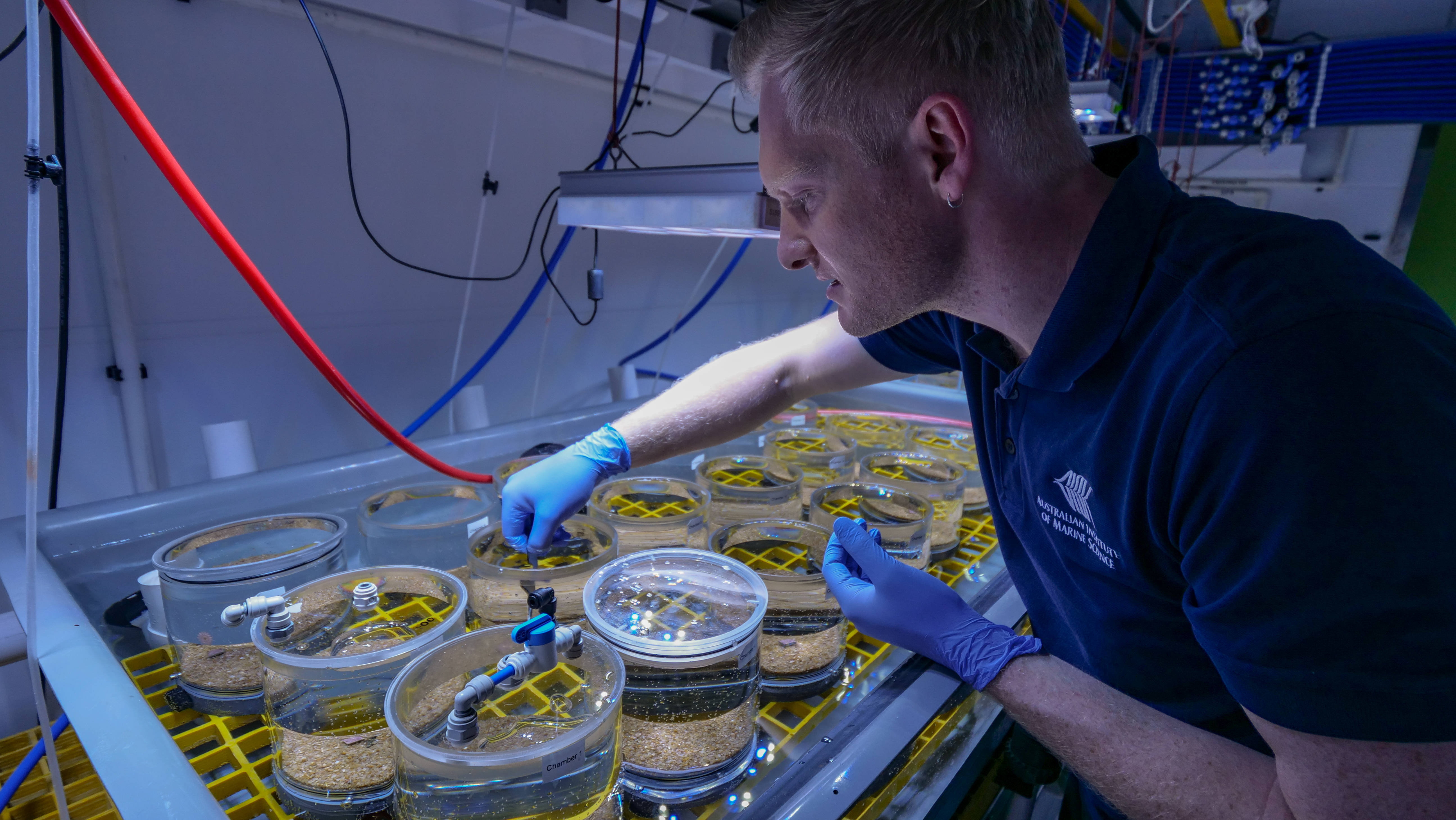
The National Sea Simulator (SeaSim), supported through NCRIS, enabled Australia’s first experimental assessment of ecological risks associated with naturally occurring radioactive materials (NORM) and co‑occurring contaminants such as mercury linked to offshore oil and gas infrastructure. Researchers from the Australian Nuclear Science and Technology Organisation (ANSTO), working with AIMS scientists, recreated realistic decommissioning scenarios by exposing marine organisms to NORM‑contaminated sediments within SeaSim’s precisely controlled mesocosm systems.
SeaSim’s ability to tightly regulate sediment conditions, water quality, and environmental parameters allowed researchers to simultaneously measure behavioural responses, contaminant uptake, and changes in sediment microbial communities, an integrated approach not previously possible. This provided new insights into how radionuclides and associated contaminants move through benthic ecosystems.
Experimental data on ecological exposure pathways for NORM have been extremely limited. By generating robust, reproducible evidence under controlled conditions, this NCRIS‑enabled research fills a critical knowledge gap in offshore decommissioning science.
The outcomes directly support risk‑based decision‑making for the future management of oil and gas infrastructure in marine environments, ensuring environmental protection while enabling sustainable industry transition.


