
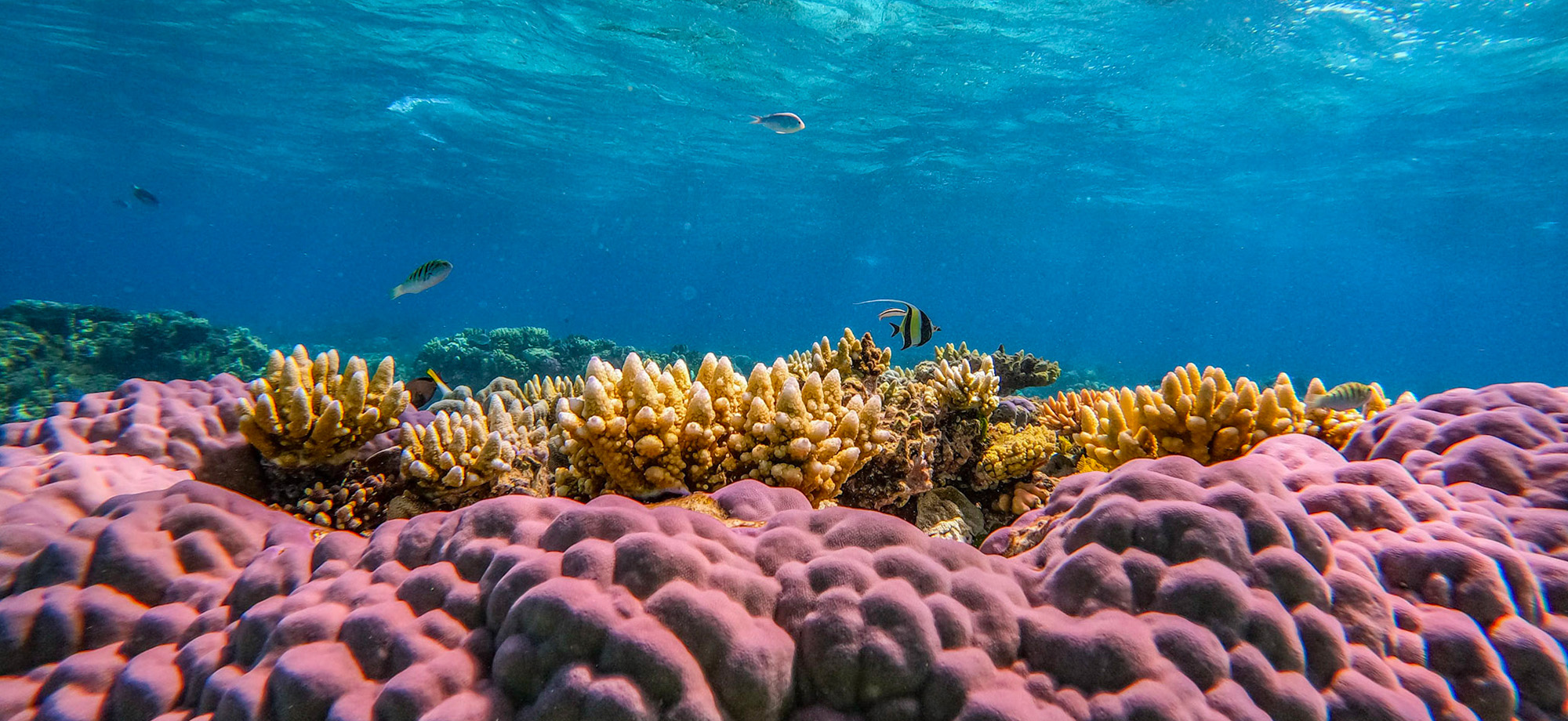
Water quality is at the heart of the health of the Great Barrier Reef and its World Heritage–listed coral, mangrove and lagoon ecosystems. Good water quality is thus essential for sustaining commercial fisheries, tourism and recreational angling.
Water quality science is the study of how water's characteristics (temperature, salinity, acidity, clarity, oxygen content, nutrient and suspended sediment levels, organic matter content and toxic pollutant loads) affect aquatic organisms, aquatic ecosystems and human uses of water. AIMS also studies how water quality interacts with global stressors such as climate change.
Scientific evidence gathered by AIMS and other institutions over the past 30 years clearly shows that human activities have increased inputs of nutrients and sediment to Reef waters. The data point to a decline in water quality in some parts of the Reef, especially nearshore areas. This affects the coral and fish populations, the tourism and fishing industries and the coastal communities that depend on them. Management efforts to maintain good water quality in the Reef will influence how we develop marine industries in the future.
The main water quality issues facing the Great Barrier Reef are:
- Runoff─ Increased runoff of sediment, nutrients and contaminants from the land has lowered coastal water quality and marine ecosystem health across northern Australia, including the Great Barrier Reef. Increased sediment runoff ultimately increases sedimentation on coastal reefs, reduces the clarity of coastal waters and restricts the growth of light-dependent plants and animals. Increased nutrient inputs stimulate algal growth on reefs and in reef waters, increase the occurrence of coral disease, and may influence crown-of-thorns starfish outbreaks.
- Pollution─Contamination of reef waters and sediments by pesticides, chemicals and oils, and waste from agriculture, industry and urban areas, affects marine life.
- Climate change and ocean acidification─The release of large amounts of greenhouse gases to the atmosphere and the enhanced uptake of carbon dioxide by the oceans are increasing seawater temperature and acidity. Increased acidity reduces the capacity of corals and other calcifying organisms to build their calcium carbonate skeletons, shells and scales that also form reefs and sediments. Elevated temperatures can lead to bleaching of corals and other organisms, an effect that may be exacerbated by nutrient runoff.
Runoff
Well documented by 25 years of AIMS research on the Reef, the increased sediment and nutrient loads to coastal waters:
- smother coral reef organisms due to the settling of suspended sediment
- reduce light availability for coral and seagrass photosynthesis due to increased turbidity
- favour the growth of macroalgae at the expense of corals due to high nutrient availability.
More recent work on contaminants such as agricultural pesticides has demonstrated that several reef foundation species are highly sensitive to acute exposure of herbicides. The potential build-up of contaminants can weaken the health and resilience of corals and other organisms, making them more susceptible to disease outbreaks or climate impacts.
Our Reef water quality research has informed the development and implementation of the Reef Water Quality Protection Plan 2013, which aims to improve the quality of water entering the Reef. Our contributions can be found in the Reef Plan Scientific Consensus Statement, published in June 2013.
More broadly, tropical marine ecosystems across northern Australia face a growing threat of exposure to oil and gas spills, due to the increased extraction operations and shipping traffic planned over coming decades, especially on the North-West Shelf. Other coastal ecosystems, especially those close to urban centres, ports and processing facilities, are exposed to contaminants such as metals, coal dust, endocrine-disrupting chemicals and microplastics.
The combined impact of land runoff makes it hard for researchers to predict the risk posed to tropical marine ecosystems by increasing agricultural and industrial activities in northern Australia.
To address this challenge, AIMS is:
- developing new toxicity tests for tropical marine species
- quantifying dose-response relationships for acute and chronic exposures to current and emerging contaminants
- developing new molecular-based biomarkers for the detection and monitoring of the effects of land runoff.
An ongoing key research challenge is to understand water quality variability in order to reliably detect trends, and to forecast the responses of key organisms and communities to changing water quality in the context of other disturbances that affect the marine environment.
Nutrients
AIMS estimates that average yearly inputs of nitrogen from the land have nearly doubled from 23 000 to 43 000 tonnes over the past 150 years, while phosphorus inputs have tripled from 2400 tonnes to 7100 tonnes. In wetter years, these inputs can be many times higher. AIMS scientists believe that, while most of this material is eventually flushed out of the Reef lagoon, transferred to the atmosphere or buried in coastal sediments, net levels in Reef waters may be slowly increasing.
The lagoon is so large and complex that we still only partly understand the processes that control the fate of nutrients: how long they remain in the lagoon, what organisms exploit them and where they go. If the Reef is to survive the threats of runoff and climate change─to be there for future generations to enjoy─we need to improve our understanding of the sources and fates of nutrients.
One of our most vital missions is to understand and interpret the nutrient cycle in the Reef and in Australia's tropical northern waters. The scientific insights and data gathered by AIMS researchers are critical inputs to Australia's Reef Water Quality Protection Plan, acknowledged as setting a world-best standard for minimising human water quality impacts in reef waters.
Murky water
Light is an important factor for the growth and survival of coral reefs. While corals can grow and form reefs over a wide range of water clarity conditions, the nature of the reefs and their continued survival depends on getting sufficient light. Measurements suggest that coastal waters in some parts of the Reef are becoming more turbid due to increased loads of fine sediment and organic particles, continually resuspended by waves and currents. Research by AIMS oceanographers and reef scientists is defining how reef organisms are affected by fine sediment and how coastal reef communities are responding to enhanced sediment runoff.
More information
· Catchments and Corals, a book by AIMS scientist Miles Furnas, provides a comprehensive description of the state of the Great Barrier Reef catchment, modern levels of runoff to the reef and the influence of runoff on coastal reef ecosystems.
Disease
Reef scientists worldwide, including on the Great Barrier Reef, have reported an upsurge in coral diseases thought to be linked to increased stress on corals caused by a combination of reduced water quality, disturbance and climate change.
Contaminants
A variety of chemicals used in land- and marine-based activities have toxic effects on corals. These chemicals can affect photosynthesis in the coral’s symbiotic algae, disrupt coral reproduction and inhibit the successful settlement of coral larvae. Chemicals that can influence corals include herbicides and insecticides, industrial wastes, oils, solvents, industrial chemicals that mimic natural hormones, and nutrients at high levels.
More information
AIMS measures pollutants in Reef waters.
Ocean acidification
Ocean acidification causes subtle but significant water quality stress on coral reef ecosystems. Much of the additional carbon dioxide added to the atmosphere by fossil fuel burning, land use and industrial activities eventually dissolves in the ocean. This alters the natural pH balance of the surface seawaters, causing a gradual acidification that reduces the ability of corals and other calcifying organisms to produce their chalky skeletons.
More information
- For more information on water quality contact Dr Britta Schaffelke.


