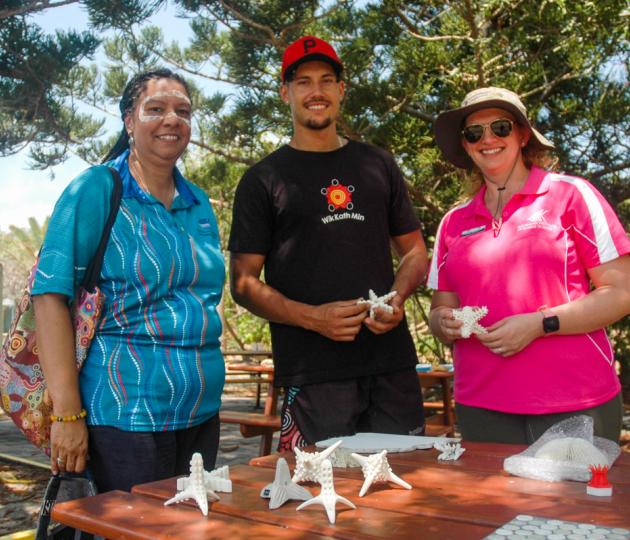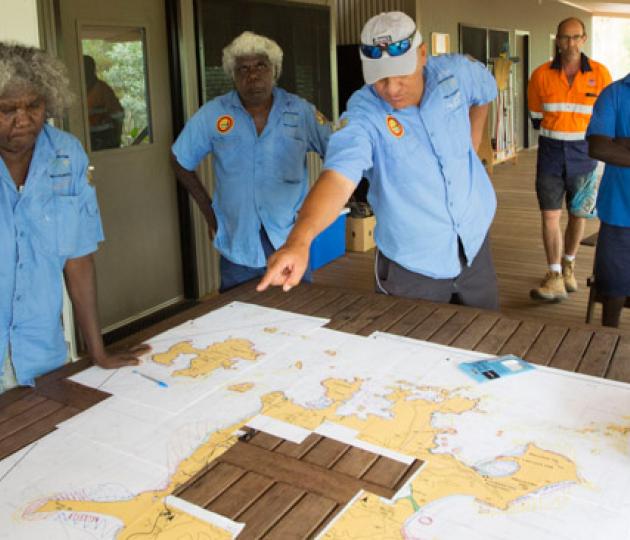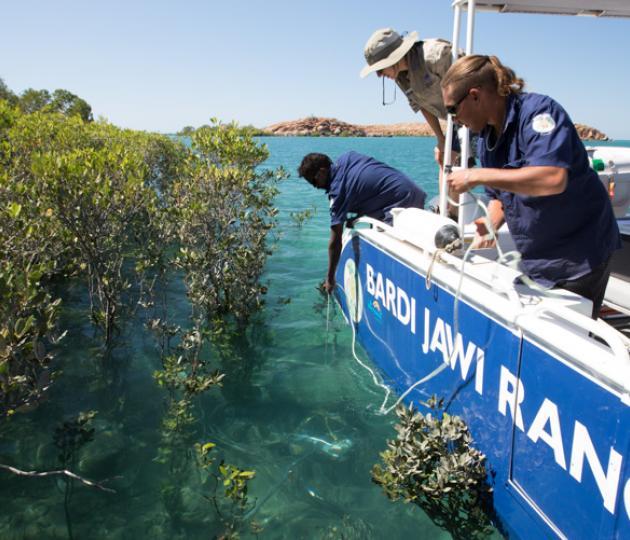
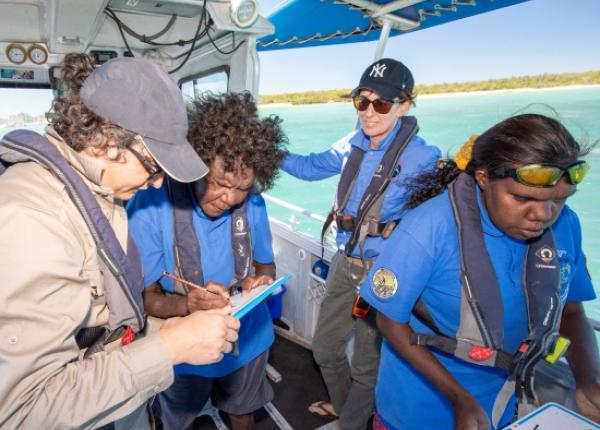
A two-way sharing alliance between the Australian Institute of Marine Science (AIMS) researchers and Indigenous ranger groups from the Kimberley, the Northern Territory and the Torres Strait is building skills and knowledge to help sea Country in an increasingly challenging environment.
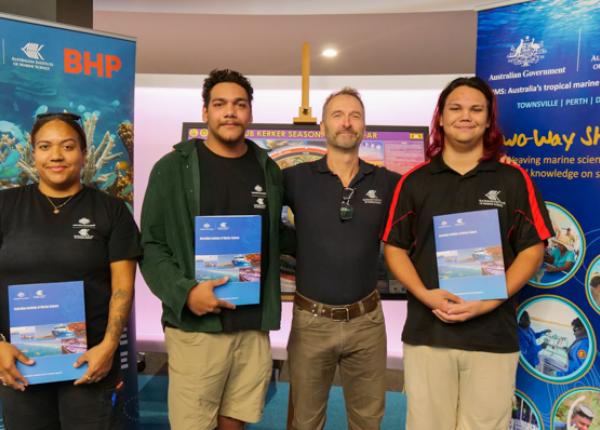
Four Indigenous aquaculture trainees who have been honing their skills at the Australian Institute of Marine Science (AIMS) have successfully completed an inaugural two-year training course and are now expanding their skills with work placements at the Townsville headquarters.
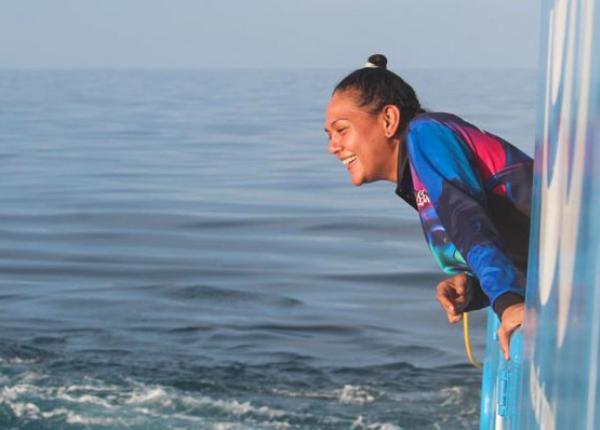
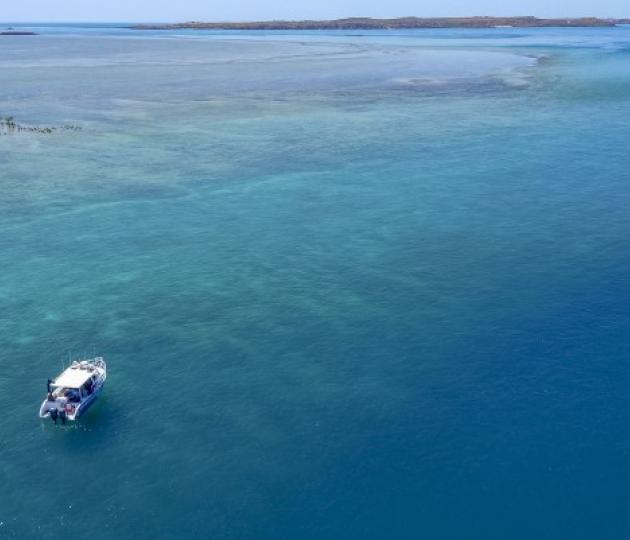
AIMS’ research vessels are equipped to take our scientists to some of Australia’s most remote and underexplored regions to help unlock their secrets. But it is our human connections that help us deepen our understanding of our submerged heritage and biodiversity in areas like West Cape York Marine Park.
The Australian Institute of Marine Science recognise Aboriginal and Torres Strait Island peoples as the Traditional Owners of the land and sea country in which we work, and Australia’s first scientists and custodians of country.
New research has confirmed that corals reefs along the Kimberley coastline will not recover quickly from an extreme event such as mass coral bleaching, unless local populations survive.
The largest mapping and research project of its kind has given traditional owners of Groote Eylandt, in the Northern Territory, the tools to better manage and protect their sea country.
AIMS has begun a series of Indigenous ranger monitoring workshops across tropical Australia, the second of which was completed in Bardi-Jawi country late in 2018.
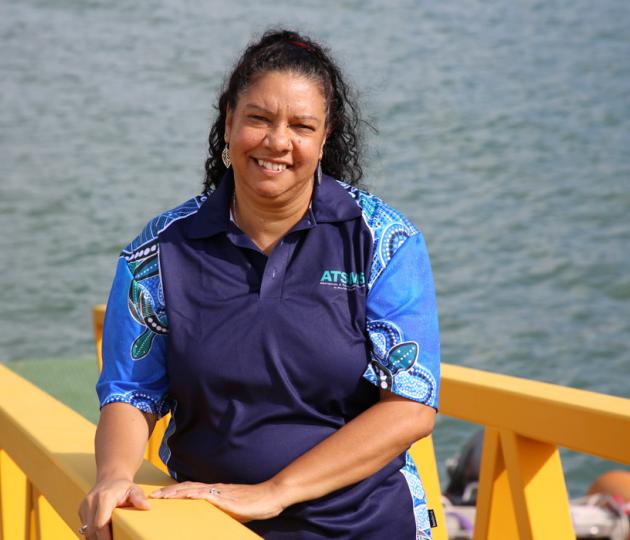
The Australian Institute of Marine Science has welcomed its first Aboriginal and Torres Strait Islander engagement co-ordinator Traceylee Forester,
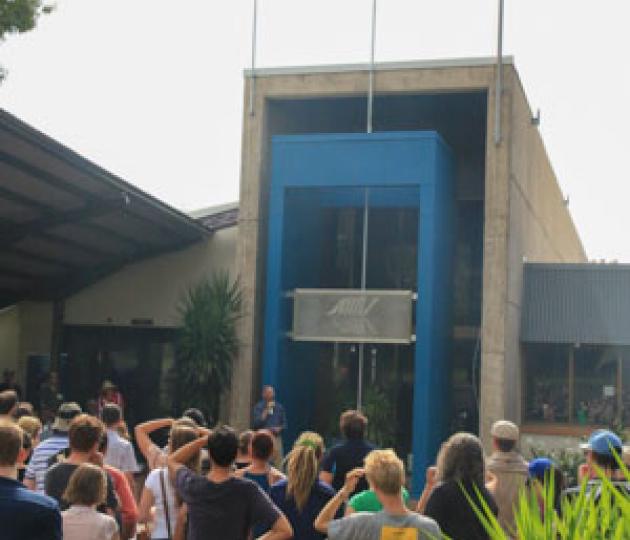
Indigenous elders of the Bindal community held a smoking ceremony and traditional welcome to country, and the Aboriginal and Torres Strait Islander flags were raised at AIMS headquarters at Cape...