
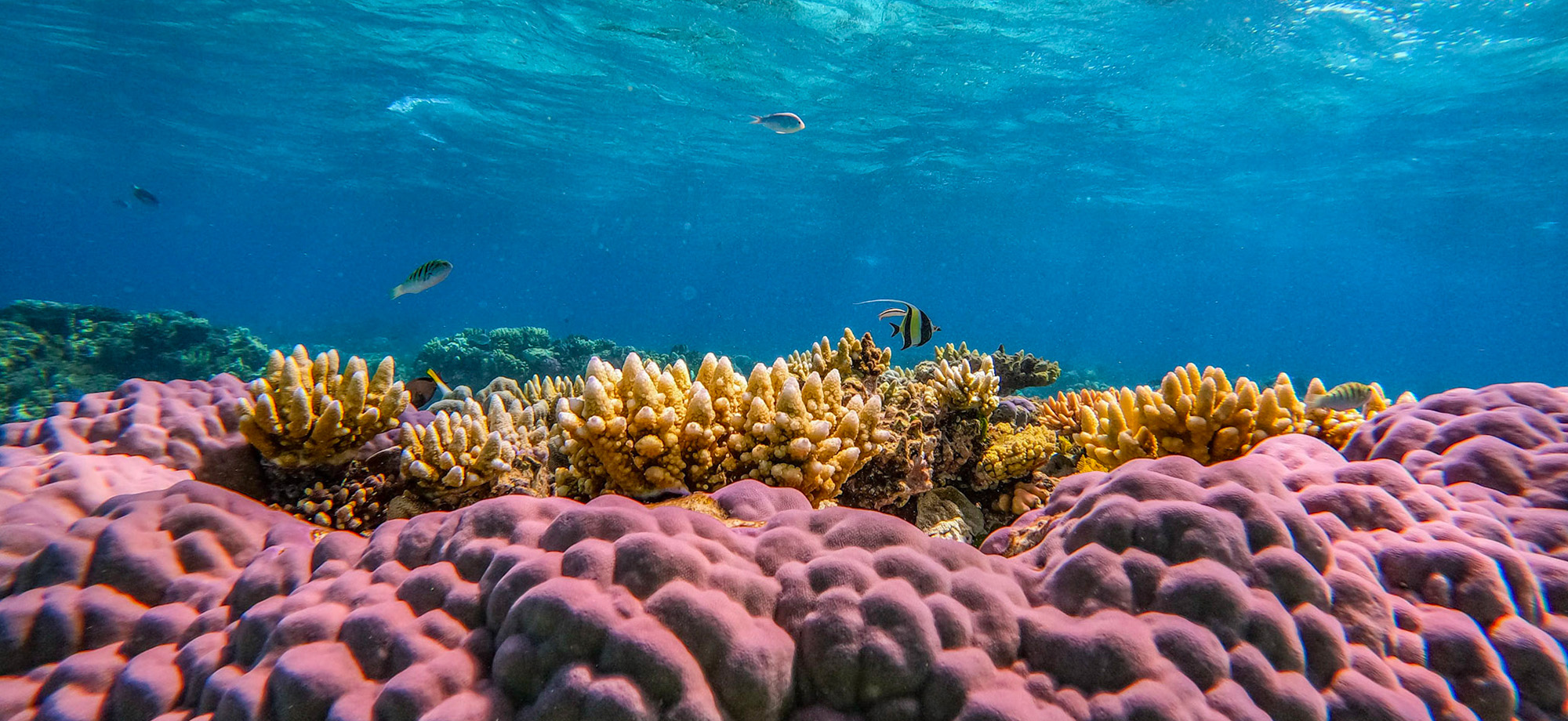
AIMS is studying the potential impacts of climate change on reef fishes.
One of our most recent studies looked at the behaviour of coral reef fish at naturally occurring carbon dioxide seeps in eastern Papua New Guinea. It found that ocean acidification robbed reef fish of their fear of predators.
The collaboration between AIMS, James Cook University, the National Geographic Society and the Georgia Institute of Technology found that small reef fish became attracted to the smell of their potential predators when they were living in an acidic environment
The scientists also found that fish could not adjust to rising carbon dioxide levels over time, causing concern for their ability to adapt as more CO2 dissolves in the oceans over the next few decades.
Our Long-term Monitoring Program has also shown that climate fluctuations can make the size of widely separated fish populations rise and fall at the same time.
This is the first evidence that variability in coral reef fish populations is strongly linked to the El Niño–Southern Oscillation (ENSO), a global climatic phenomenon affecting the ocean and atmosphere that causes a body of unusually warm water to build up in the eastern Pacific Ocean.
The synchronistic change of distant populations means that unfavourable conditions could affect fish populations across large numbers of reefs simultaneously. In such circumstances, localised extinctions will be more likely, particularly for small populations of short-lived species.
AIMS and the ARC Centre of Excellence in Coral Reef Studies have also investigated the effects of high seawater temperatures on the health and future prospects of baby Ambon damselfish.
The study revealed that environmental differences experienced early in life not only have immediate consequences for survival, but also profoundly influence the chances of success later in life.
Future climate change is likely to exert strong evolutionary pressure on fish populations by selecting more heat-tolerant forms. However, fish biologists and natural resource managers question whether such adaptation is possible given the rate of warming that most climate models forecast.
In species that cannot accommodate the rate of temperature rises, the most likely response is altered patterns of distribution and abundance.


