
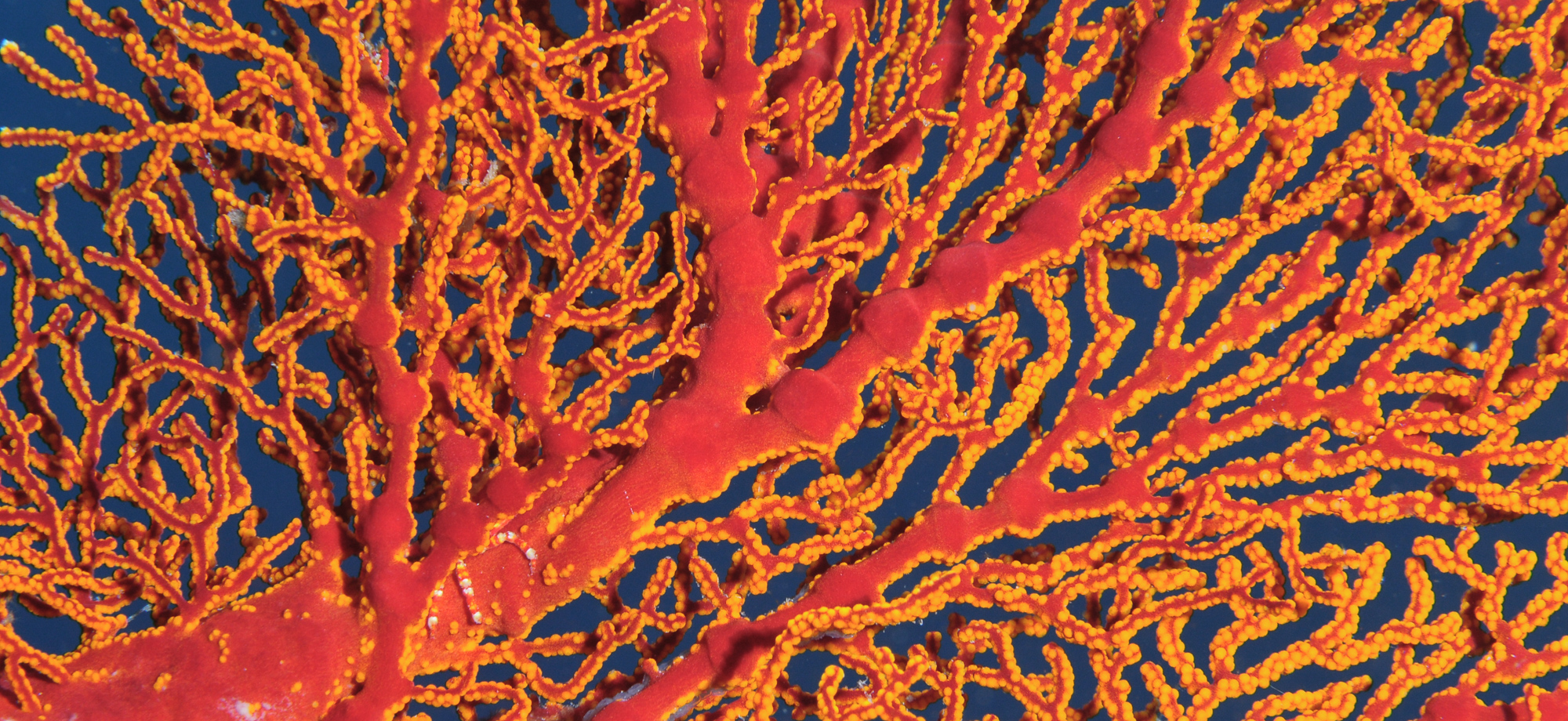
sponges- WA waters teeming with biodiversity
Share this:


Specialist scientists at a workshop in Perth this week have been identifying a treasure trove of marine sponges and have confirmed unexpectedly high biodiversity in deep Western Australian waters off Ningaloo Reef.
The workshop for expert taxonomists (scientists who specialise in the classification of biological organisms), convened by Dr Christine Schönberg of AIMS, has brought together participants from around Australia and internationally.
More than 1,000 sponge samples were obtained from a joint AIMS/Geoscience Australia research cruise to the Ningaloo Reef region off the Western Australian coast in 2008. The project was funded by the Marine Biodiversity Hub of the Commonwealth Environment Research Facilities (CERF) initiative that supports public-good environmental research throughout Australia.
The samples complement more than 600 invertebrate species that have been collected from deep waters of Ningaloo Reef through previous expeditions by AIMS and the Western Australian Museum.
Senior Curator at the Western Australian Museum, Dr Jane Fromont, said that some of the species found on the survey were rare and strange, such as the stony sponges that are quite different to the more familiar soft bath sponges. A renowned international expert on these Lithistid sponges, Dr Andrzej Pisera from the Institute of Paleobiology in Warsaw, Poland, is at the workshop identifying animals from this group.
The workshop also includes sponge taxonomists from museums and marine institutes in Queensland, Victoria, South Australia, Western Australia and the Northern Territory.
"Many of samples being examined by the team of taxonomists at the workshop are either new discoveries for Western Australia or new to science," Dr Fromont said.
The new collections of sponges were gathered from the sea floor in waters between 20 and 120 metres deep and were accompanied by a rich profusion of other floor-dwelling marine life including corals, sea whips, sea fans and basket stars.
"Samples were taken from extensive sponge gardens that display an unusual richness and density of filter feeders. Sponge gardens are also known from southern Australian coasts between Exmouth and Sydney with new reefs being discovered on recent AIMS/GA voyages in northern Australia, indicating the importance of these ecosystems," said Dr Chris Battershill, leader of AIMS' biodiversity research
"These animals are all filter feeders and the richness of their communities points to highly productive plankton food sources around Ningaloo that we believe are fuelled by the regular upwelling of deep nutrient-rich waters," Dr Battershill said.
"Sponges have existed in the sea for hundreds of millions of years. This long history has allowed them to evolve into diverse forms so that they can live in an extensive range of marine environments from the tidal zone to the floors of the deep ocean," he said.
AIMS scientist Dr Andrew Heyward, who has led multiple expeditions to Ningaloo Reef over the past decade, was also at the workshop. "The project has shown that the deepwater habitats are even richer than previously thought and suggests that there are still many discoveries to be made with more fieldwork," Dr Heyward said.
Ningaloo Reef is one of the largest and least studied coral reef ecosystems in the world. Filling the gaps in understanding patterns and processes of tropical marine biodiversity in this system is a priority for AIMS.
Note to electronic media: you are welcome to film taxonomists working on the sponge samples at the AIMS laboratory, second floor of the Botany Building, University of Western Australia campus, Perth. Drs Battershill and Heyward will be available for interview.
For further information, please contact:
Dr Chris Battershill, AIMS Perth, 0409 049 809,
Dr Andrew Heyward, AIMS Perth,0417 400 273,
2010 is the UN International Year of Biodiversity.
See:
http://www.cbd.int/2010/welcome/
If you don't already subscribe to our RSS News feed to be notified of the latest marine science updates when they happen you can do so by clicking on this link.

AIMS RSSNewsfeed or by clicking on the
icon in your web browser when our home page is loaded.
Share this


