
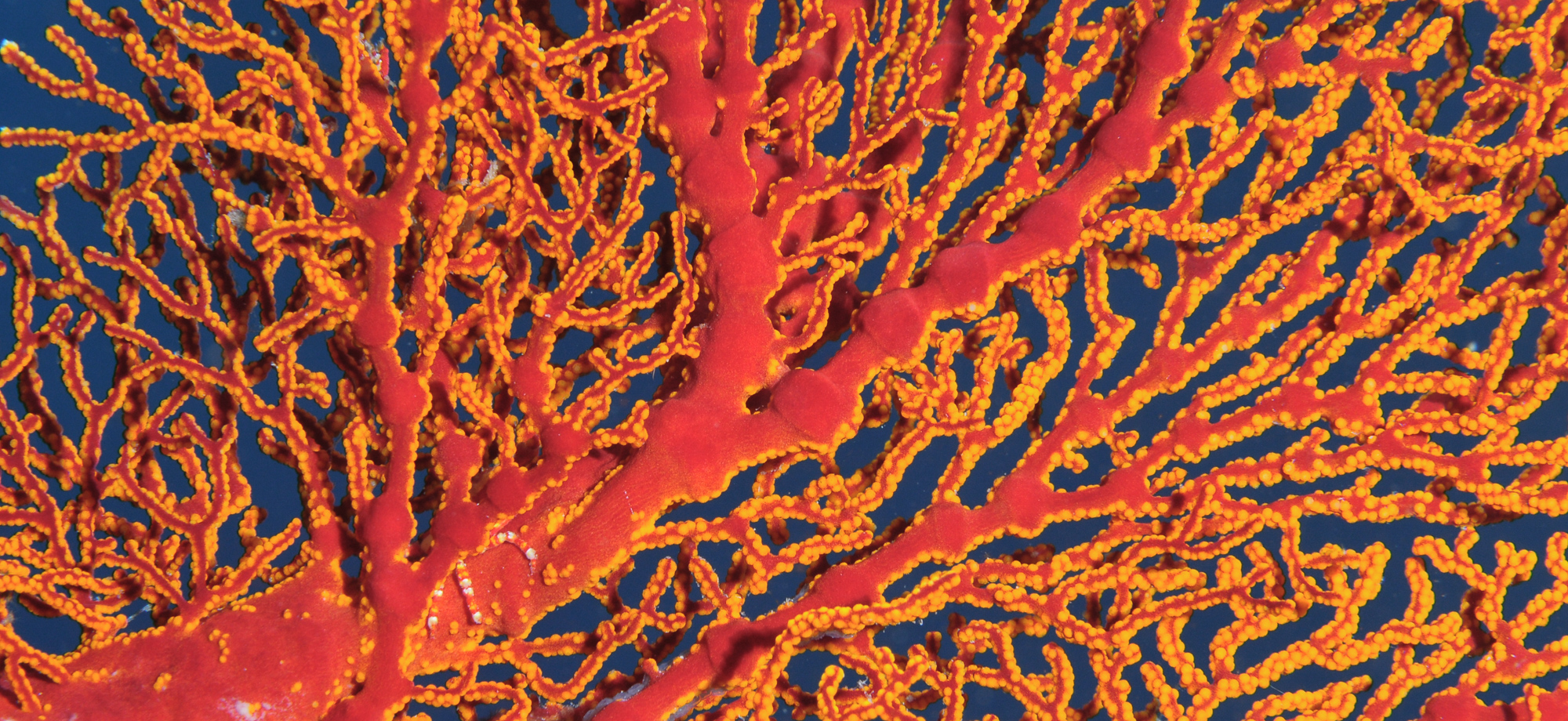
Hard core data shows 14 per cent drop in coral growth on GBR since 1990
Share this:


It's official: the biggest and most robust corals on the Great Barrier Reef (GBR) have slowed their growth by more than 14 per cent since the "tipping point" year of 1990. Evidence is strong that the decline has been caused by a synergistic combination of rising sea surface temperatures and ocean acidification.
A paper* published today (Friday 2 January 2009) in the prestigious international journal Science and written by AIMS scientists Dr Glenn De'ath, Dr Janice Lough and Dr Katharina Fabricius is the most comprehensive study to date on calcification rates of GBR corals.
Calcification is how much skeleton the coral puts down each year. Reef corals create their hard skeletons from materials dissolved in seawater. When large amounts of atmospheric carbon dioxide enter seawater, the resulting chemical changes effectively reduce the ability of marine organisms to form skeletons.
The findings reported in the paper are based on rigorous statistical analyses of annual growth bands from 328 Porites corals from 69 reefs across the length and breadth of the GBR, and extending back in time up to 400 years. The data are from AIMS' Coral Core Archive (ACCA), the most extensive such collection in the world.
"It is cause for extreme concern that such changes are already evident, with the relatively modest climate changes observed to date, in the world's best protected and managed coral reef ecosystem," according to AIMS scientist and co-author Dr Janice Lough.
Up to the tipping point in 1990, there were modest fluctuations in calcification, with an annual decline rate recorded that year of 0.3 per cent. However, by 2005 growth was declining by 1.5 per cent per year. On current trends, the corals would stop growing altogether by 2050.
"The data suggest that this severe and sudden decline in calcification is unprecedented in at least 400 years," said AIMS scientist and principal author Dr Glenn De'ath.
"The causes of this sharp decline remain unknown, but our study suggests that the combination of increasing temperature stress and ocean acidification may be diminishing the ability of GBR corals to deposit calcium carbonate," he said.
"Coral skeletons form the backbone of reef ecosystems. Their complexity provides the habitat for the tens of thousands of plant and animal species associated with the reef," co-author Dr Katharina Fabricius said. "Skeleton formation also offsets natural erosion and breakage."
"Previous laboratory experiments and models have predicted that calcification will decline in response to acidification, but here we have shown for the first time that corals are already affected in their natural environment throughout the GBR," Dr Fabricius said.
More carbon dioxide in the oceans causes the oceans' alkaline/acid balance (their "pH") to shift towards acidic. Oceanic pH has already dropped by 0.1 and could decrease by 0.4 by the end of this century. This is due to the oceans absorbing about a third of the extra carbon dioxide (the main greenhouse gas) that humans have put into the atmosphere.
If projections of a 0.4 decline in pH are correct, this would be "well outside the realms of anything organisms have experienced over hundreds of thousands of years," Dr Lough said. The rate, as well as the magnitude, of changes in ocean chemistry and temperature are of great concern for the future of marine ecosystems.
More acidic oceans will affect many sea creatures, not just coral. All calcifying organisms that are central to the function of marine ecosystems and food webs will be affected, and precipitous changes in the biodiversity and productivity of the world's oceans may be imminent.
*The Science paper, written by AIMS scientists Glenn De'ath, Janice Lough and Katharina Fabricius, is titled "Declining coral calcification on the Great Barrier Reef". Go tohttp://www.sciencemag.org/
A media conference announcing the Science paper will be held at 10am on Friday 2 January 2009 at the Southbank Convention Centre boardroom, South Townsville.Note to electronic media: a DVD containing relevant images and footage of the researchers will be available at the media conference.
Click here to view the scientists describing their research
You can also download this MP4 46Mb video file for use in your
iPod or iPhone by right clicking the link and selecting 'Save Target As ...'
For further information, please contact:
Dr Glenn De'ath
Phone: 0428 713 845
E-mail:g.death@aims.gov.au
Dr Janice Lough
Phone: 0424 790 791
E-mail:j.lough@aims.gov.au
Dr Katharina Fabricius
Phone: 0428 713 845
E-mail: k.fabricius@aims.gov.au
Ms Wendy Ellery, AIMS Media Liaison
Phone: 0418 729 265
E-mail: w.ellery@aims.gov.au
If you don't already subscribe to our RSS News feed to be notified of the latest marine science updates when they happen you can do so by clicking on this link.

AIMS RSSNewsfeed or by clicking on the
icon in your web browser when our home page is loaded.
Share this


