
Increased nutrient availability, for example from human activity (e.g. agricultural runoff, soil erosion, discharges of sewage and aquaculture waste), usually leads to a rise in chlorophyll concentrations in coastal waters because of increased phytoplankton biomass. Phytoplankton can rapidly deplete nutrients to levels which would be difficult to sample and analyse directly.
Concentrations of the plant pigment "chlorophyll a" (which occurs in all marine phytoplankton) provide a useful proxy indicator of the amount of nutrients incorporated into phytoplankton biomass, because phytoplankton have predictable nutrient-to-chlorophyll ratios. Chlorophyll a is the most commonly used parameter for monitoring phytoplankton biomass and nutrient status, as an index of water quality.
The Great Barrier Reef Marine Park Authority (GBRMPA) initiated this program in December 1992 as a long-term water quality monitoring program.
A number of cross-shelf transects and coastal stations have been regularly sampled along the length of the GBR.
Chlorophyll monitoring has been managed by AIMS since 1999 and is an important part of AIMS' water quality research and monitoring activities. Since 2005, a reduced chlorophyll monitoring effort has been a component of the Reef Rescue Marine Monitoring Program , a responsibility of GBRMPA under the Reef Water Quality Protection Plan .
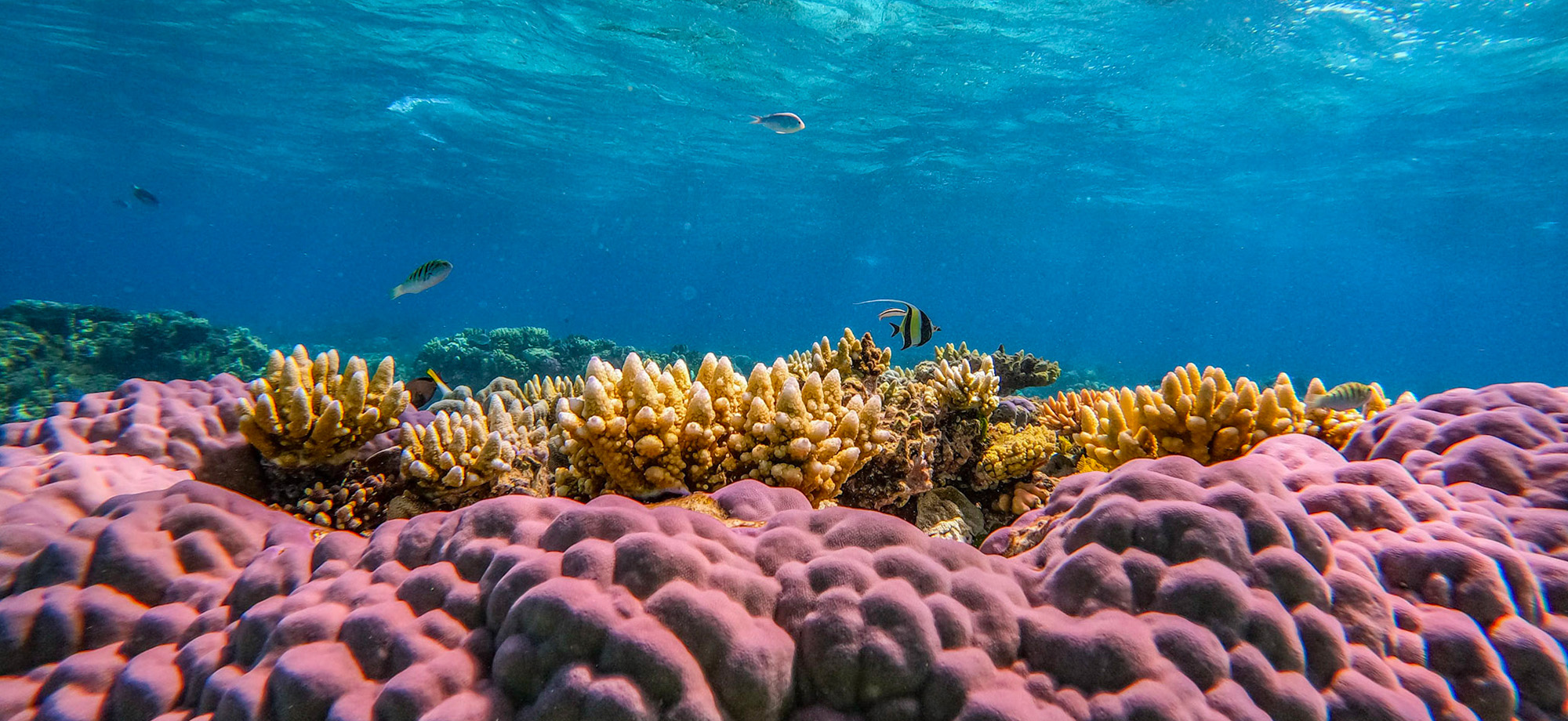
Results to date show that compared with coastal regions in other parts of the world, chlorophyll a concentrations in the GBR lagoon are generally low. Chlorophyll a concentrations vary across the shelf seasonally and also with latitude. There are also persistent local gradients in chlorophyll a concentration, usually away from the coast. Consistent long-term trends in chlorophyll a concentrations haven't yet been discerned.


